The Complete History of Ryanair: From Humble Beginnings to European Giant
The Complete History of Ryanair: From Humble Beginnings to European Giant
Trending
|
5 months ago
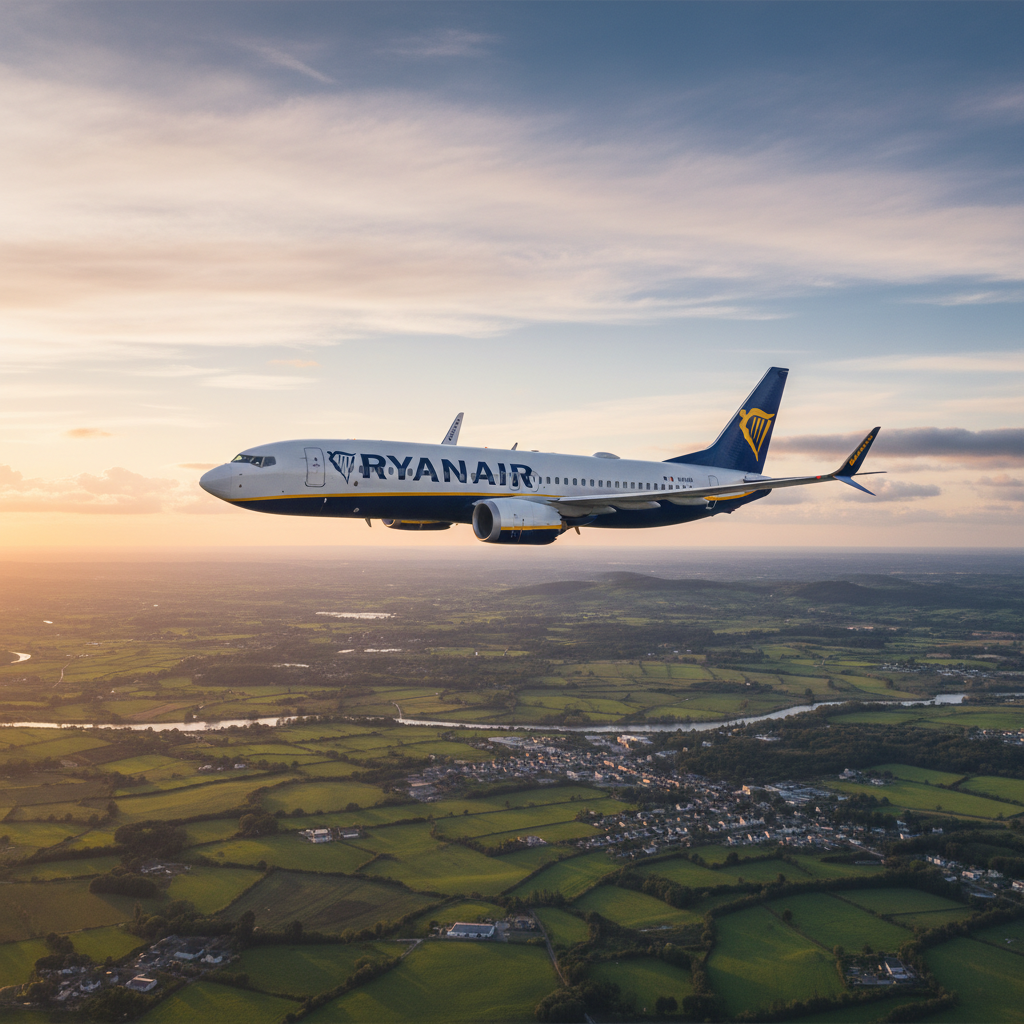
Founding Ryanair: A Daring Irish Venture
In the early 1980s, the landscape of European air travel was largely dominated by state-owned flag carriers, offering what most considered a rather staid and expensive experience. However, a bold new vision was taking shape in Ireland. In 1985, Christy Ryan, along with his son Michael O'Leary, founded a new airline that would irrevocably alter the industry: Ryanair. Their initial aim was modest, yet revolutionary for the time: to provide a low-cost alternative on the highly competitive route between Waterford in Ireland and London Gatwick, directly challenging the established duopoly of Aer Lingus and British Airways.
The early operations were financed by the Ryan family and commenced with a 15-seater Embraer Bandeirante turboprop aircraft. The philosophy from the outset was clear: keep costs rock-bottom and pass the savings onto the passenger. This audacious approach quickly garnered attention, proving that a market existed for budget-conscious travellers willing to forgo traditional frills for significantly cheaper fares. This founding ethos laid the groundwork for the future powerhouse Ryanair would become.
Early Growth and the Low-Cost Revolution
The success of the initial Waterford-Gatwick route quickly prompted expansion. Ryanair soon acquired larger aircraft, transitioning to BAC One-Eleven jets, and began to open more routes, primarily connecting Ireland and the UK. However, the airline faced significant challenges in these formative years. Competition was fierce, and the company initially struggled to balance its rapid expansion with profitability. A critical turning point arrived in the early 1990s when Michael O'Leary, after studying the success of Southwest Airlines in the United States, fully embraced and implemented a radical new business model: the ultra-low-cost carrier (ULCC).
This strategy involved a relentless focus on cost-cutting in every conceivable area. This meant secondary airports with lower landing fees, a single aircraft type for simplified maintenance, rapid turnaround times, direct sales to cut out travel agents, and charging for previously bundled services. The liberalisation of the European airline market in the mid-1990s, particularly the 'Third Package' of aviation liberalisation measures, provided the perfect environment for Ryanair's model to truly flourish. With the abolition of bilateral agreements and the granting of cabotage rights, Ryanair was free to operate across Europe, unhindered by national restrictions. This period saw explosive growth, as more and more consumers opted for Ryanair's unbeatable fares, even if it meant fewer amenities.
The Modern Era: Expansion and Evolution
As the new millennium dawned, Ryanair cemented its position as a dominant force in European aviation. Its distinctive blue and yellow livery became a common sight across the continent. While some facets of its ultra-low-cost model remained controversial, such as its often-strict baggage allowances and supplementary charges, there was no denying its immense popularity and profitability. The airline continually expanded its network, reaching into new markets in Central and Eastern Europe, and even dipping its toes into North Africa and the Middle East.
Despite its reputation for no-frills travel, Ryanair also began to adapt and evolve, albeit cautiously. Recognising changing passenger expectations and increased competition, the airline introduced a more user-friendly website, allocated seating, and improved its in-flight offerings. These changes, while seemingly minor, demonstrated a willingness to refine its customer experience while fiercely guarding its low-cost principles. Ryanair's journey in the modern era has been characterised by ambitious growth targets, strategic acquisitions, and a continued commitment to offering the lowest fares.
Fleet, Operations, and Alliances
From its earliest turboprops, Ryanair quickly standardised its fleet around the Boeing 737 family of aircraft. This strategic decision to operate a single type of aircraft brought significant advantages in terms of maintenance, crew training, and spare parts management, all contributing to its low-cost model. Today, Ryanair operates one of the largest and youngest fleets of Boeing 737 aircraft in the world, including the latest MAX variants, often custom-fitted with more seats to maximise revenue per flight.
Unlike many traditional airlines, Ryanair has largely eschewed formal alliances such as Star Alliance or Oneworld. Its business model relies on direct point-to-point routes, high frequencies, and efficient operations, rather than complex codeshares or interlining agreements. This independent approach allows the airline full control over its network and pricing strategy, often operating from smaller, less congested airports which further reduces costs. However, in recent years, Ryanair has experimented with connecting flights and a limited number of feeder agreements with long-haul carriers, indicating a potential, albeit slow, shift in its rigid operational philosophy.
Ryanair Today: A European Juggernaut
Today, Ryanair stands as an undisputed titan of European aviation. It is one of the continent's largest airlines by passenger numbers, carrying millions of travellers annually across an extensive network of routes. The airline's impact on the industry is profound; it has democratised air travel, making it accessible to a far wider segment of the population. Its aggressive pricing strategies have forced competitors, both legacy carriers and other low-cost airlines, to re-evaluate their own operations and cost structures.
Despite economic shifts, environmental pressures, and ongoing challenges within the aviation sector, Ryanair continues to innovate and expand. Its consistent focus on efficiency, cost control, and passenger volume has ensured its enduring success. From its humble beginnings with a single 15-seater aircraft challenging incumbents on a short Irish-UK route, Ryanair has grown into a vast group of airlines, embodying the spirit of entrepreneurial daring and fundamentally reshaping how Europeans fly. Its story is a testament to the power of a clear business vision executed with relentless determination.

Airspace Times Team
Aviation news desk
Published: 09 May 2026
Share to:
Latest news
Related airlines
powered by We Do Dev Work 
We use cookies and similar technologies to enhance your Browse experience, personalize content and ads, provide social media features, and analyze our traffic. By clicking 'Accept All' or continuing to use our website, you consent to the use of cookies as described in our Cookie Policy