The Enduring Legacy: A History of Air China
The Enduring Legacy: A History of Air China
Trending
|
5 months ago
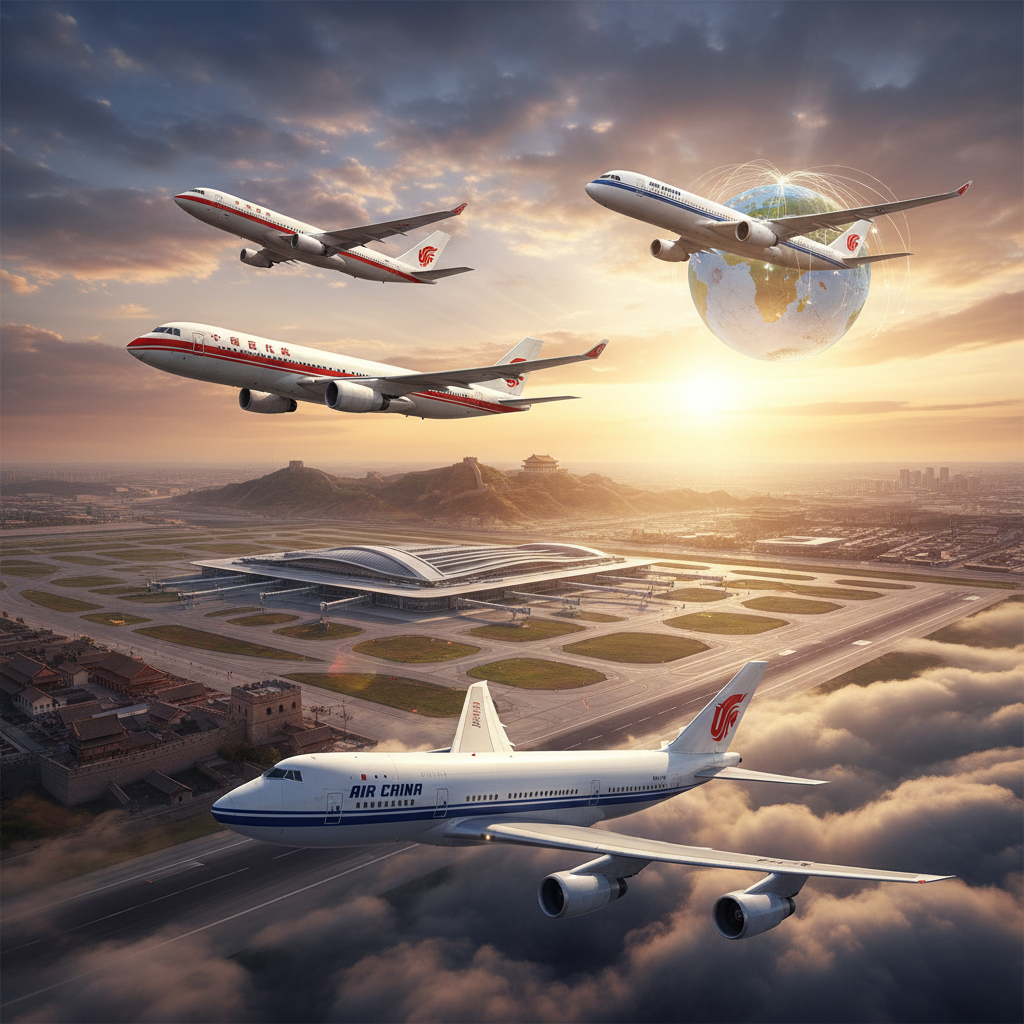
The Enduring Legacy: A History of Air China
The story of Air China is, in many ways, the story of modern Chinese aviation itself. From its origins deeply rooted in the nation's post-revolutionary development, it has ascended to become a flag carrier of considerable international renown, embodying the spirit of connection and progress.
Founding and Early Days
The lineage of Air China can be traced back to the Civil Aviation Administration of China (CAAC), which, for many years, operated the nation's entire civil aviation fleet. As China began to open its doors to the world in the late 20th century, a strategic decision was made to reform the monolithic CAAC. This led to the unbundling of its operational arm into several distinct airlines, each serving particular regions or specialties. Air China itself was formally established in 1988, emerging from a key part of the former CAAC’s international operations. Its mission was clear: to represent China on the global aviation stage.
Initially carved out as a specialist in intercontinental routes, Air China inherited a nascent, but growing, international network and a fleet of aircraft suited for long-haul journeys. This strategic focus allowed it to cultivate expertise in serving distant markets and to establish a reputation for reliability in international air travel early on.
Early Growth and Modernisation
The 1990s and early 2000s were a period of dynamic growth and significant change for Air China. As China's economy boomed and its engagement with the global community deepened, air travel demand, particularly for international routes, surged. Air China was at the forefront of meeting this demand, steadily expanding its route network and modernising its fleet.
- Fleet Expansion: The airline began to acquire more modern, fuel-efficient aircraft, including Boeing and Airbus models, to replace older types and to support its expanding operations.
- Route Development: New destinations across Asia, Europe, North America, and Australia were added, strengthening China's aerial links with the world.
- Service Enhancements: Efforts were made to improve inflight service and ground operations to meet international standards and cater to a diverse passenger base.
This era was also marked by a trend towards consolidation within the Chinese aviation industry. In 2002, Air China underwent a significant restructuring, merging with China National Aviation Corporation (CNAC) and China Southwest Airlines. This move was pivotal, solidifying Air China’s position as one of the "Big Three" state-owned airlines, significantly expanding its domestic and regional reach, and creating a formidable national and international carrier.
The Modern Era: A Global Player
Air China’s journey into the 21st century has been characterised by its emergence as a truly global aviation powerhouse. The airline successfully listed on the Hong Kong and London stock exchanges in 2004, a testament to its strong financial standing and commitment to international business practices.
A critical step in its global integration was joining Star Alliance in December 2007. This membership linked Air China with a vast global network of airlines, offering its passengers seamless connections and a host of benefits, including reciprocal frequent flyer programs and lounge access. It also positioned Air China as a key gateway for Star Alliance partners into the lucrative Chinese market.
Fleet and Alliances
Today, Air China operates a substantial and diverse fleet, primarily comprising modern Airbus and Boeing aircraft. This includes long-haul giants like the Boeing 747, 777, and 787 Dreamliner, as well as the Airbus A330 and A350, alongside a robust contingent of single-aisle aircraft for its extensive domestic and regional network. The airline’s commitment to fleet modernisation reflects its dedication to efficiency, passenger comfort, and environmental responsibility.
As a proud member of Star Alliance, Air China leverages this extensive partnership to offer unparalleled connectivity. Its strategic alliances extend beyond the alliance, involving codeshare agreements with numerous airlines worldwide, further broadening its reach and offering more choice to travellers.
Air China Today
From its humble beginnings within the broader CAAC system, Air China has transformed into a leading airline, proudly bearing the national flag and connecting China’s vibrant culture and burgeoning economy with every corner of the globe. It serves an extensive network of domestic and international destinations, playing a crucial role in China’s economic development and its engagement with the world.
The airline continues to invest in technology, customer experience, and sustainable operations, adapting to the evolving demands of the aviation industry. With its distinctive phoenix logo, a symbol of good fortune and rebirth in Chinese culture, Air China continues its ascent, navigating the complexities of modern air travel while upholding its legacy as a vital link between East and West.

Airspace Times Team
Aviation news desk
Published: 13 May 2026
Share to:
Latest news
Related airlines
powered by We Do Dev Work 
We use cookies and similar technologies to enhance your Browse experience, personalize content and ads, provide social media features, and analyze our traffic. By clicking 'Accept All' or continuing to use our website, you consent to the use of cookies as described in our Cookie Policy