The Enduring Legacy: A History of United Airlines
The Enduring Legacy: A History of United Airlines
Trending
|
5 months ago
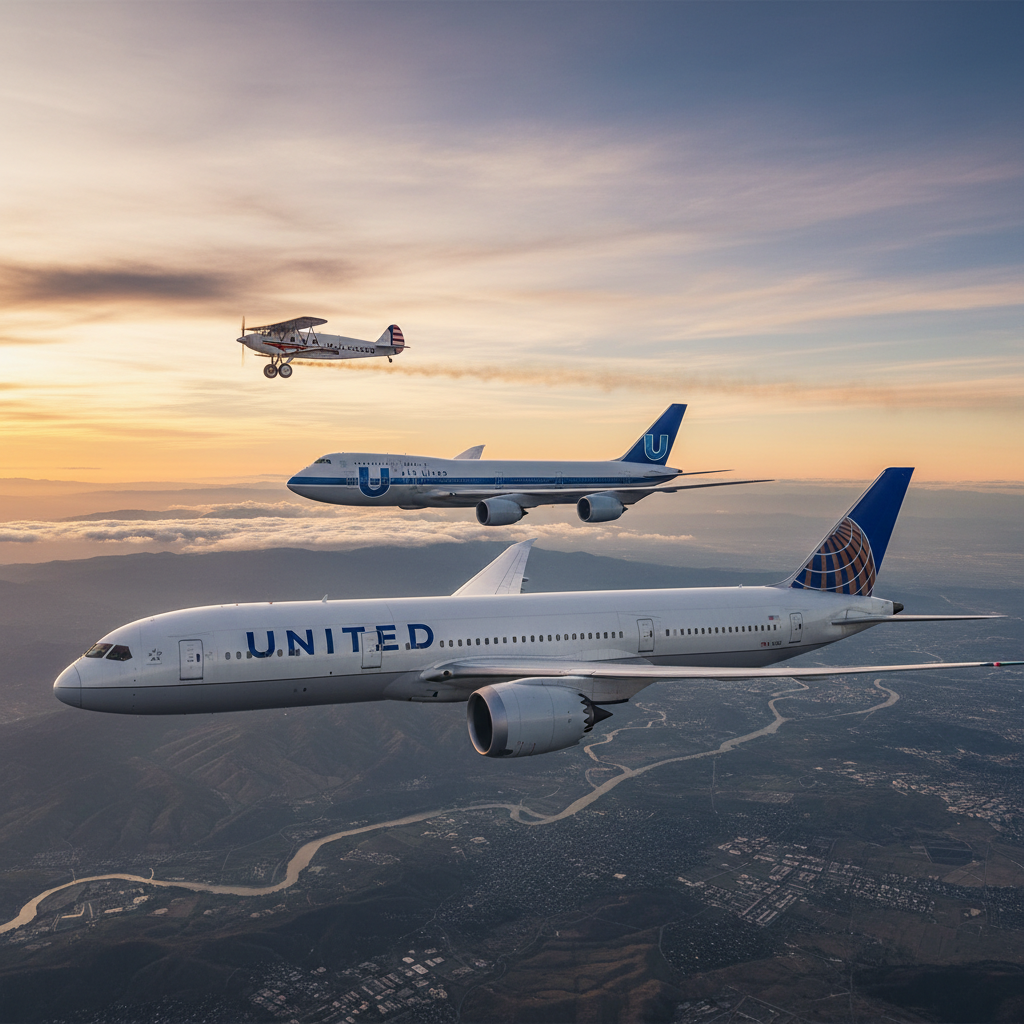
Founding: A Mail-Order Beginning
The story of United Airlines is, in many ways, the story of early American aviation itself, intricately woven with the ambition of delivering mail by air. Its origins trace back to the pioneering spirit of the 1920s, specifically to the work of impresario William Boeing and his audacious venture: the Boeing Aircraft and Transport Corporation. While Boeing was busy forging remarkable aircraft, a significant development occurred in 1926 with the awarding of Contract Air Mail (CAM) routes. Boeing’s operation, through a subsidiary known as Boeing Air Transport, secured the lucrative CAM-18 route, linking Chicago to San Francisco – a vital transcontinental artery.
This mail delivery business, while seemingly prosaic, was the crucible in which passenger airline services would be forged. The success of CAM-18 quickly led to the realisation that these routes could, and should, carry people as well as letters. In a strategic consolidation that marked a pivotal moment, Boeing Air Transport merged with other burgeoning air carriers, including Pacific Air Transport, National Air Transport, and Varney Air Lines. This amalgamation, masterminded by Boeing, led to the formation of United Aircraft and Transport Corporation in 1929 – an aviation behemoth that encompassed manufacturing and airline operations. It was from this conglomerate that the distinct entity we know today as United Air Lines would emerge, initially as the airline division.
Early Growth and Innovation
The 1930s ushered in a period of intense innovation and expansion for United. The passage of the Air Mail Act of 1934, often referred to as the "Spoils Conference" Act, forced the separation of aircraft manufacturing from airline operations. This legislative unbundling saw United Aircraft and Transport Corporation split into three distinct entities: Boeing (manufacturing), United Aircraft (now Raytheon Technologies, manufacturing), and United Air Lines (the airline). This government intervention, while disruptive, allowed United Air Lines to focus solely on its burgeoning air transportation business.
United quickly distinguished itself through a commitment to technological advancement and passenger service. It was a launch customer for many iconic aircraft, including the revolutionary Boeing 247 in 1933, often considered the first modern airliner. This twin-engine monoplane dramatically improved speed, comfort, and safety, setting new standards for commercial aviation. Later, United went on to heavily operate the Douglas DC-3, further solidifying its presence across the growing American air network. The airline also pioneered many in-flight services and safety innovations during this era, striving to make air travel appealing and accessible to the public, slowly transforming a niche endeavour into a mainstream mode of transport.
Modern Era: Mergers, Challenges, and Global Reach
The latter half of the 20th century and into the 21st saw United Airlines navigate significant turbulence and transformative changes. Deregulation in 1978 profoundly reshaped the American airline industry, leading to increased competition and a wave of mergers and acquisitions. United, already a major player, expanded its route network considerably, extending its reach across the globe.
A defining moment in its modern history was the 2010 merger with Continental Airlines. This monumental consolidation created one of the world's largest airlines, significantly enhancing its international presence, particularly across the Atlantic and Pacific. While integrating two vast operations presented considerable challenges, the merger ultimately solidified United's position as a truly global carrier, offering an expansive network to myriad destinations. This period also saw the airline face various economic downturns, fuel crises, and intense competition, demanding constant adaptation and strategic recalibration.
Fleet & Alliances: A Diverse Sky
United Airlines has consistently operated a diverse and advanced fleet of aircraft, a testament to its long-standing relationship with major manufacturers like Boeing and Airbus. From its early reliance on Boeing aircraft, it now commands a formidable fleet comprising various models, including the 737, 757, 767, 777, and the state-of-the-art 787 Dreamliner, alongside Airbus A319 and A320 series aircraft. This varied fleet allows United to efficiently serve a wide range of routes, from short-haul domestic flights to ultra-long-haul international journeys.
As a founding member of the Star Alliance, the largest airline alliance in the world, United boasts an unparalleled global network. Established in 1997, Star Alliance connects United with numerous international carriers, offering seamless travel and extensive codesharing opportunities to thousands of destinations across more than 190 countries. This strategic alliance is crucial to its global competitive strategy, providing passengers with greater flexibility, connectivity, and loyalty program benefits.
Today: A Global Aviation Leader
Today, United Airlines stands as a titan of the skies, a cornerstone of global air travel. Headquartered in Chicago, Illinois, it operates a vast network of domestic and international routes, connecting millions of passengers annually. With major hubs strategically located across the United States, including key operations in Chicago (O'Hare), Denver, Houston, Los Angeles, Newark, San Francisco, and Washington D.C. (Dulles), United facilitates extensive connectivity.
The airline continues to invest in modernising its fleet, enhancing the passenger experience, and pursuing sustainable aviation initiatives. From its humble beginnings carrying mail, United has evolved into a sophisticated global enterprise, continually adapting to the ever-changing landscape of the aviation industry. Its journey reflects a century of innovation, ambition, and an unwavering commitment to connecting the world, remaining a pivotal player in shaping the future of air travel.

Airspace Times Team
Aviation news desk
Published: 29 Apr 2026
Share to:
Latest news
Related airlines
powered by We Do Dev Work 
We use cookies and similar technologies to enhance your Browse experience, personalize content and ads, provide social media features, and analyze our traffic. By clicking 'Accept All' or continuing to use our website, you consent to the use of cookies as described in our Cookie Policy