The Grand Journey: A History of Turkish Airlines
The Grand Journey: A History of Turkish Airlines
Trending
|
5 months ago
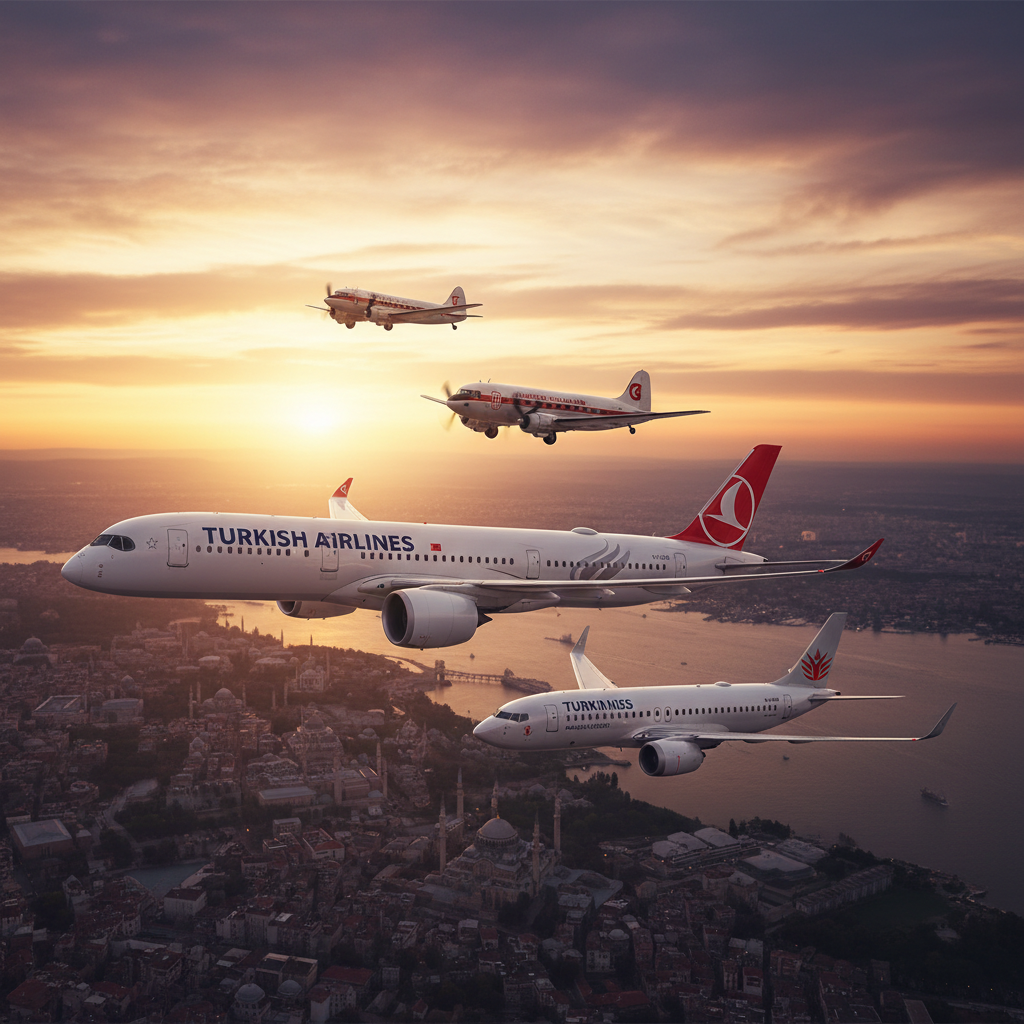
Founding: A National Flag Takes Flight
In the vibrant tapestry of Turkish history, a pivotal moment for civil aviation arrived on May 20, 1933, with the establishment of Turkish State Airlines. Born out of a national desire for connectivity and progress, this fledgling carrier initially operated under the Ministry of National Defence. Its early fleet consisted of just a handful of aircraft, primarily Curtiss Kingbirds, Junkers F.13s, and ANF Les Mureaux 1150s, which bravely took to the skies to connect a few key cities within Turkey.
The vision was clear: to unite the diverse landscapes of Turkey through air travel. From these modest beginnings, the airline laid the groundwork for what would become a significant player on the world stage. The ambition of those early pioneers sculpted the initial routes and forged the operational principles that would guide the airline for decades.
Early Growth: Spreading Wings Beyond Borders
The post-World War II era brought about significant changes and a period of rapid expansion for the airline. In 1956, a crucial rebranding occurred, and Turkish State Airlines officially became Türk Hava Yolları, or Turkish Airlines as it is internationally known. This change marked a strategic shift towards a more commercial and internationally focused operation.
With government support and a growing demand for air travel, Turkish Airlines began to acquire more modern aircraft, including Vickers Viscounts and later, jets like the Fokker F27s and Douglas DC-9s. These new additions facilitated the opening of initial international routes, connecting Turkey to neighbouring European cities and further afield. The airline's network steadily grew, demonstrating a burgeoning ambition to link Turkey with the global community. Key historical events, such as Turkey's increasing engagement in international affairs, undeniably contributed to the airline's growth trajectory during this period.
Modern Era: A Global Connector
The late 20th and early 21st centuries saw Turkish Airlines truly come into its own as a global aviation powerhouse. Strategic investments in fleet modernisation, service enhancements, and an aggressive expansion of its route network transformed the airline. The introduction of wide-body aircraft, such as the Airbus A330s and Boeing 777s, allowed for the inauguration of long-haul flights to destinations across Asia, Africa, and the Americas.
Istanbul's unique geographical position, straddling two continents, proved to be an invaluable asset, enabling Turkish Airlines to develop a highly effective hub-and-spoke model. This strategy allowed it to connect countless cities around the world, often with convenient layovers in Istanbul, turning the city into a major global transit point. The airline’s commitment to quality and customer service also played a crucial role in its ascent, earning it various accolades and a strong reputation among travelers.
Fleet & Alliances: A Star on the Horizon
Turkish Airlines operates a modern and diverse fleet, continually updated to meet the demands of an expanding network and passenger expectations. This commitment to a state-of-the-art fleet ensures efficiency, safety, and comfort for its passengers. The airline's strategic decision to join Star Alliance in 2008 was a monumental step, significantly enhancing its global reach and connectivity. This alliance, one of the world's largest airline networks, allowed Turkish Airlines to offer seamless travel to hundreds of destinations worldwide through codeshare agreements and shared loyalty programs.
Being part of Star Alliance has not only broadened its appeal but also solidified its position as a major international carrier, offering passengers unparalleled access to a vast global network. The airline continues to invest in new generation aircraft, such as the Boeing 787 Dreamliners and Airbus A350s, ensuring it remains at the forefront of aviation technology and passenger experience.
Today: A Legacy Soaring High
Today, Turkish Airlines stands as one of the world's leading airlines, known for its extensive network, quality service, and commitment to passenger satisfaction. It regularly flies to more cities and countries than any other airline globally, a testament to its enduring growth and strategic vision. From its humble beginnings with a few propeller planes, it has evolved into a symbol of Turkish pride and a formidable force in international aviation.
The journey of Turkish Airlines is a compelling narrative of ambition, resilience, and strategic foresight. It embodies the spirit of a nation that dared to reach for the skies, transforming a national carrier into a global leader. As it continues to navigate the complexities of the modern aviation landscape, Turkish Airlines remains a vital link connecting cultures and economies across the globe.
For more information, please visit the official Turkish Airlines website.

Airspace Times Team
Aviation news desk
Published: 15 May 2026
Share to:
Latest news
Related airlines
powered by We Do Dev Work 
We use cookies and similar technologies to enhance your Browse experience, personalize content and ads, provide social media features, and analyze our traffic. By clicking 'Accept All' or continuing to use our website, you consent to the use of cookies as described in our Cookie Policy