The History of US Airways: A Journey Through American Aviation
The History of US Airways: A Journey Through American Aviation
Trending
|
5 months ago
The History of US Airways: A Journey Through American Aviation
The story of US Airways is a captivating narrative woven into the very fabric of American aviation. It's a tale of regional ambition blossoming into a major national carrier, enduring economic shifts, and ultimately, becoming a pivotal part of one of the world's largest airlines. To truly appreciate its trajectory, one must journey back to its humble beginnings.
Founding: From Mail Routes to Passenger Service
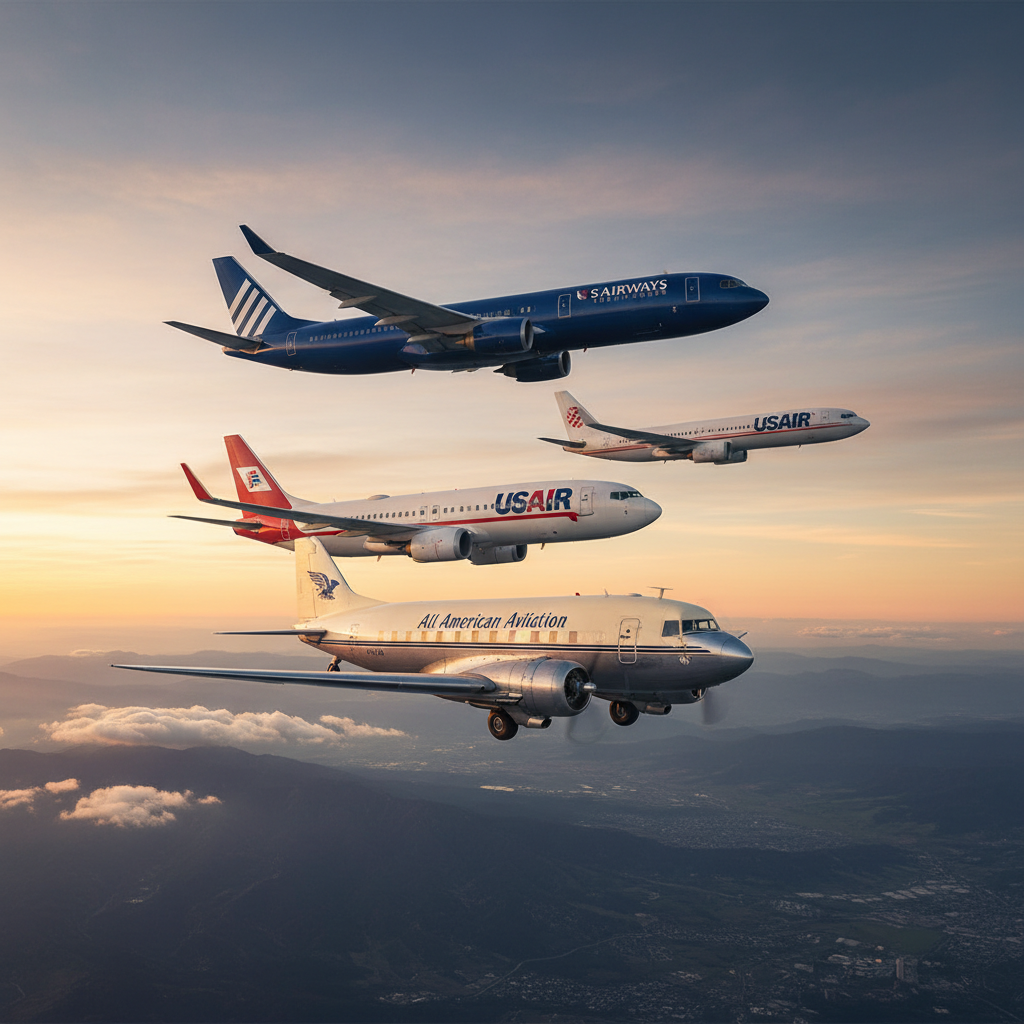
Our story commences not as US Airways, but as All American Aviation, founded in 1939 by Richard C. du Pont. Initially, this enterprise carved out a niche in airmail delivery across the rugged Allegheny Mountains, pioneering a unique "pickup" system that allowed mail to be collected and delivered without the aircraft needing to land. This innovative approach was crucial for connecting isolated communities in Pennsylvania, Ohio, West Virginia, and Delaware.
By 1949, recognizing the burgeoning demand for passenger air travel, the company transitioned, adopting the name All American Airways and shifting its focus. The era of scheduled passenger service had begun, connecting cities that were previously underserved by larger carriers. This early period was characterized by a commitment to regional connectivity, a theme that would resonate throughout much of the airline's existence.
Early Growth and Evolution: The Allegheny and USAir Era
The 1950s heralded a period of significant expansion and rebranding. In 1953, the airline became Allegheny Airlines, a name that paid homage to its operational heartland. Under this moniker, Allegheny grew steadily, acquiring smaller regional carriers and expanding its network across the northeastern United States. It became a prominent "local service" carrier, providing vital links between smaller cities and major hubs.
The deregulation of the airline industry in 1978 proved to be a watershed moment. Allegheny, like many other airlines, seized the opportunity to expand its routes beyond its traditional regional confines. To reflect this broader national ambition, the airline rebranded once more in 1979, becoming USAir. This new identity marked its intention to compete on a larger stage, venturing into transcontinental routes and intensifying competition with established giants.
Modern Era: Challenges, Mergers, and Rebranding
The 1980s and 1990s were a period of both significant growth and considerable challenges for USAir. The airline undertook several key acquisitions, notably Henson Airlines and Piedmont Airlines, which further expanded its reach and fleet. However, these expansions also brought integration difficulties and financial pressures. Despite these hurdles, USAir continued to solidify its position as a major domestic carrier.
In 11997, a significant transformation occurred with the rebranding to US Airways. This change not only modernized its image but also signalled a renewed focus on international expansion and a more contemporary airline experience. The new millennium, however, brought profound challenges, including economic downturns and the devastating impact of 9/11 on the aviation industry. US Airways navigated these turbulent times through financial restructuring and strategic adjustments.
Fleet & Alliances: A Diverse Collection
Throughout its history, US Airways operated a diverse fleet of aircraft, reflecting its evolving needs from regional turboprops to long-haul jets. Early aircraft included the venerable Douglas DC-3, progressing through propeller-driven aircraft like the Convair 340, and later, the Jet Age brought Boeing 727s, Boeing 737s, and McDonnell Douglas MD-80s. In its later years, the fleet was predominantly comprised of Airbus A320 family aircraft, Boeing 757s, and Airbus A330s for international routes.
Alliances also played a crucial role in expanding US Airways' global reach. It was a founding member of the Star Alliance, one of the largest airline alliances in the world. This membership allowed US Airways to offer its passengers seamless connections to a vast global network, enhancing its competitiveness in the international market, before later transitioning to Oneworld.
Today: A Legacy Integrated
The final chapter for US Airways as an independent entity came with its merger with American Airlines. Announced in 2013 and completed in 2015, this monumental merger created the world's largest airline. The US Airways brand gradually faded, with its operations, fleet, and employee base being fully integrated into American Airlines. While the name US Airways is no longer seen on airport signage or aircraft livery, its legacy endures.
The routes, the operational expertise, and the dedicated personnel of US Airways have all contributed to the strength and scale of the modern American Airlines. From airmail pioneers to a cornerstone of a global aviation giant, the journey of US Airways is a testament to innovation, resilience, and the ever-evolving nature of air travel. Its history reminds us that even as brands merge and names change, the spirit of aviation continues to fly forward, carrying with it the storied past of those who built the industry.

Airspace Times Team
Aviation news desk
Published: 17 May 2026
Share to:
Latest news
Related airlines
powered by We Do Dev Work 
We use cookies and similar technologies to enhance your Browse experience, personalize content and ads, provide social media features, and analyze our traffic. By clicking 'Accept All' or continuing to use our website, you consent to the use of cookies as described in our Cookie Policy