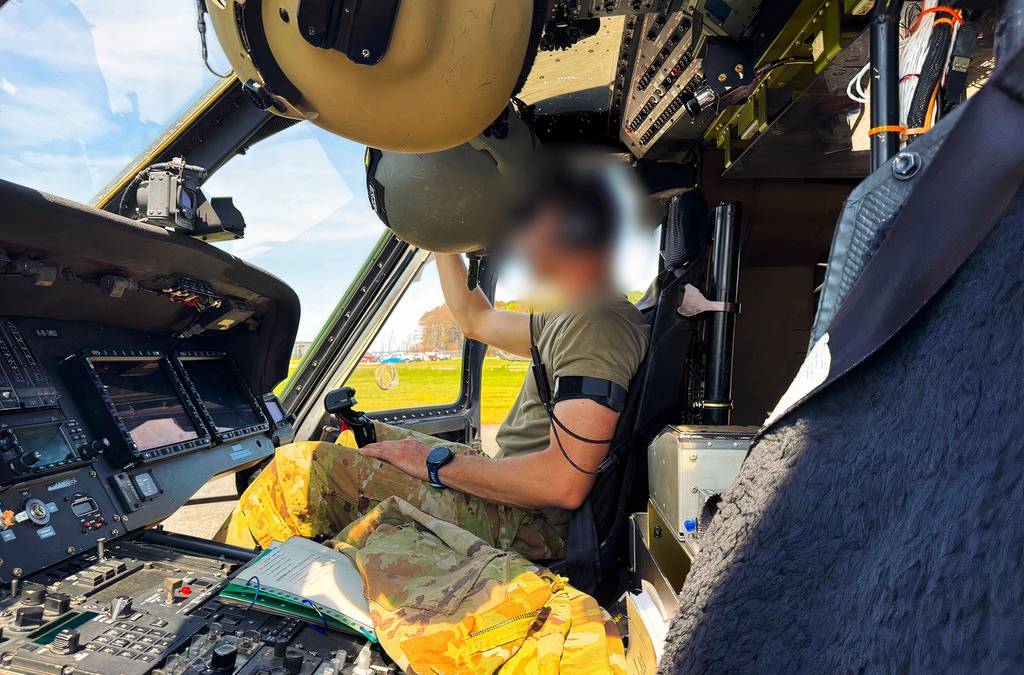
Tiger Tech Solutions, a Miami-based startup led by CEO Harrison Wittels and COO Rick Whittington, has developed advanced wearable biometric technology designed to operate reliably in extreme environments including military combat, aviation, and healthcare. The company’s innovative platform features a single-arm sensor capable of collecting electrocardiogram data and autonomic nervous system measurements without relying on cloud connectivity or invasive chest leads.
In an interview with Military.com at the eMerge Americas Conference, Wittels highlighted the company's focus on edge-based physiological monitoring. Unlike commercial devices, Tiger Tech's systems are built for operational environments involving body armor, sweat, dirt, and long-duration missions, where traditional biometric devices often fail. Their sensors process data locally on the device, ensuring security and operational continuity without external data transmission.
From Pandemic Response to Tactical Monitoring
The company gained recognition during the COVID-19 pandemic after receiving Emergency Use Authorization from the FDA for a non-invasive AI platform that detects COVID-related biomarkers. This early success demonstrated the system's ability to identify physiological changes associated with infectious diseases, leading to further applications in military research on blast overpressure exposure, heat stress, and cognitive load.
“We’re the only company in the world to actually produce something during COVID,”
Whittington, an Army veteran, emphasized the value of their biometric systems in quantifying physiological effects among service members exposed to repeated blast force and parachute opening shocks. Tiger Tech’s biometric data provides insights into long-term health impacts often inadequately documented in military operations.
The company has also partnered with industries such as aviation, demonstrating biometric monitoring during helicopter operations in degraded visual environments, and plans to expand into underwater research with waterproofing their devices. Additionally, collaborations with athletic organizations like the University of Miami football program are underway to improve athletic performance and injury prevention.
Advancing Battlefield Awareness and Military Integration
One goal is integrating physiological monitoring into command-and-control systems to give commanders real-time data on personnel status, including injury and stress levels. Whittington described a battlefield scenario where knowing unit health in real time could enhance operational safety and decision-making.
Wittels and Whittington acknowledged challenges in working within Pentagon acquisition cycles, which often require rapid adaptation, especially in conflict zones like Ukraine. They advocate for shifting wearable biometrics from consumer gadgets to operational tools that improve military readiness and human performance in extreme conditions.

