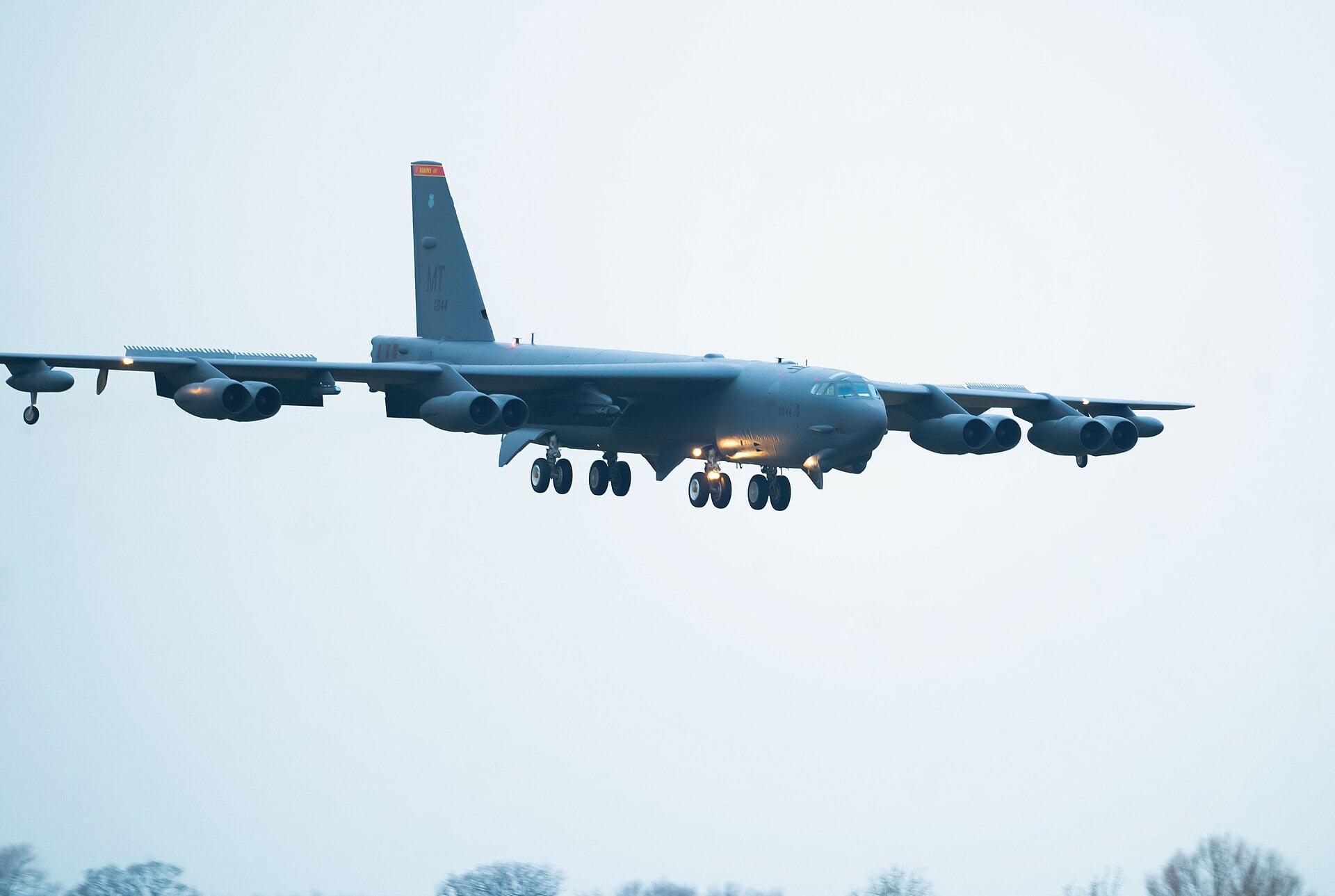
The B-52 Stratofortress employs a unique crosswind landing technique enabled by a specialized gear system that allows it to land crabbing into the wind, sidestepping the risks associated with wing-low approaches on its long, bicycle-style landing gear. This distinctive system, which dates back to the 1950s, involves the main gear trucks being swiveled 20 degrees to either side, keeping the aircraft aligned with the runway during crosswind conditions while the fuselage remains pointed into the wind.
During landing, the bomber approaches with its fuselage angled into the wind, with the wheels remaining aligned with runway markings thanks to the gear system. This approach minimizes side loads and reduces the risk of damaging the wingtip outriggers or engine pods, which are close to the ground due to the aircraft's long span and slender fuselage. The system is also utilized during takeoff, allowing the B-52 to lift off in a crabbed position, maintaining its alignment with the runway without needing to rotate the aircraft significantly.
While the ability to land and take off in a crab is rare among large aircraft, the B-52's system has been a permanent feature, making it exceptional. This capability, coupled with the aircraft's formidable payload and range, ensures that it remains a vital component of the United States Air Force into the 2050s. The design's longevity and continued utility exemplify the adaptability of early aircraft technology to modern operational requirements.

