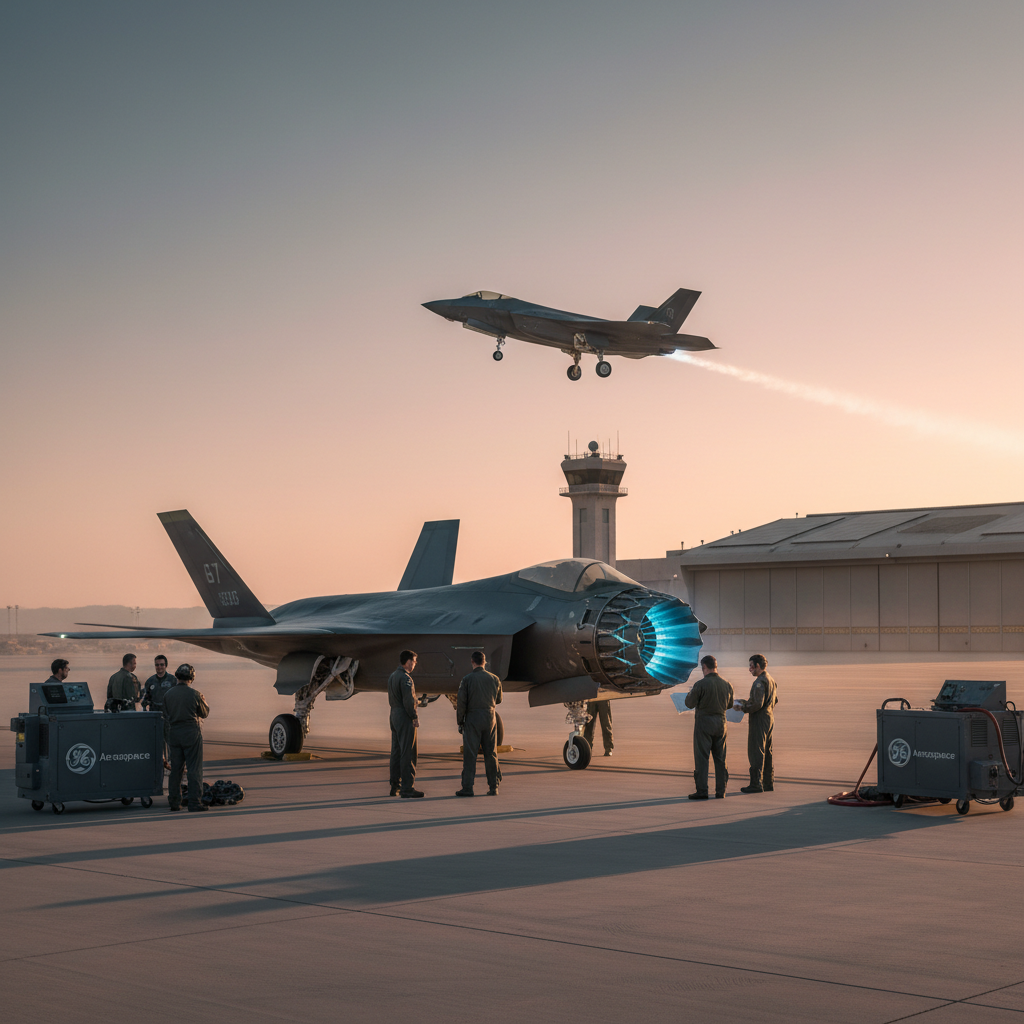
The United States Air Force (USAF) is expanding its research into adaptive engine technology, as General Electric (GE) Aerospace and Pratt & Whitney advance development of variable-cycle combat engines under the Next-Generation Adaptive Propulsion program. Besides the primary focus on supersonic fighter engines, the USAF is now investigating non-afterburning derivatives of similar concepts to support a broader range of mission roles. This move aims to enhance operational flexibility, fuel efficiency, and performance.
The XA100 engine, developed by GE, features an added bypass stream highlighted in blue, showcasing its adaptive capacity. Pratt & Whitney’s XA103, designed for the Boeing F-47, is slightly smaller than its predecessor, the XA101, and exemplifies the push for scalable propulsion solutions. These engines are part of a renewed emphasis on adaptive technology that can adjust to the needs of various combat scenarios, including both high-speed and loitering tasks.
Strategic Expanded Use of Adaptive Engines
As these developments unfold, the USAF's interest in derivatives of the adaptive engines suggests a strategic effort to diversify its propulsion assets. By studying non-afterburning variants, the service aims to optimize for fuel economy and reduce thermal signatures in missions that do not require supersonic speeds. Industry analysts see this as a significant step toward future fleet modernization, potentially impacting the design of next-generation fighters and auxiliary support aircraft.
The ongoing projects are supported by key industry players such as GE Aerospace and Pratt & Whitney, both of which are leading efforts in adaptive propulsion technology. The focus aligns with broader defense initiatives like the Next-Generation Air Dominance (NGAD) program, aimed at maintaining air superiority through technological innovation. The advancement of these engines could redefine future air combat capabilities and operational flexibility for the U.S. military.

