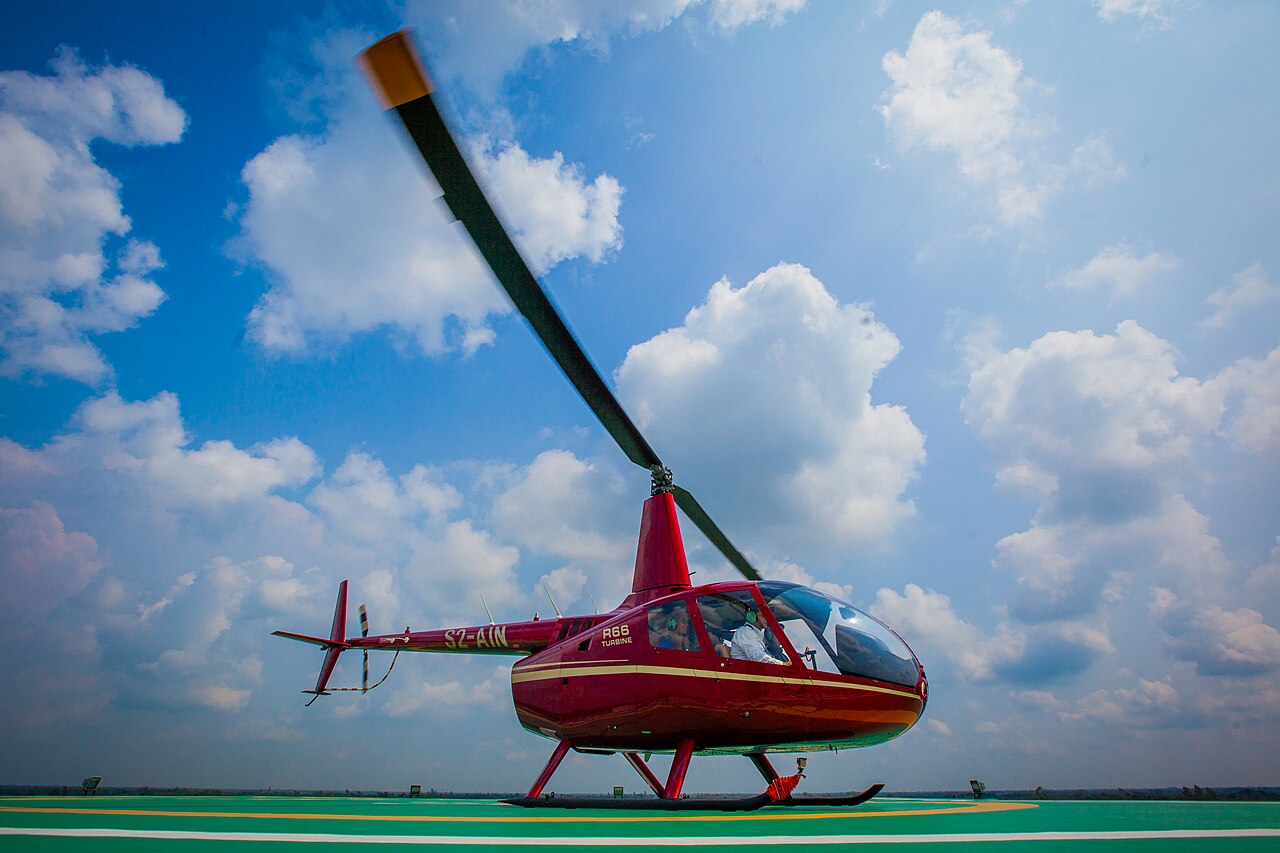
The United States Army has announced a major overhaul of its rotary-wing pilot training program, known as Flight School Next, with a focus on cost efficiency and foundational skills. On August 13, the Army awarded a contract to M1 Support Services and Robinson Helicopters to operate a new fleet of Robinson R66 helicopters, designated TH-66 Sage, replacing the current Airbus UH-72 Lakota. This shift back to a single-engine helicopter aims to provide basic flight training at a lower cost while maintaining training quality.
The decision reflects a strategic move to simplify initial helicopter training, emphasizing fundamentals such as terrain flight and navigation on an aircraft that is affordable and reliable. Robinson has produced over 1,500 units of the R66 since 2011, and the helicopter is widely used for civil and military training worldwide. The Army’s new model will train up to 1,500 pilots annually, up from approximately 1,250 today, with the graduates progressing to the service's more complex combat aircraft like the Apache, Black Hawk, Chinook, and future MV-75 tiltrotor.
Maj. Gen. Clair A. Gill, Commanding General of the U.S. Army Aviation Center of Excellence, stated that this initiative would significantly improve pilot training and generate long-term cost savings for the Army. George Krivo, Chairman and CEO of M1 Support Services, expressed pride in delivering an integrated training solution that incorporates advanced simulators, AI-driven adaptive learning systems, and modern glass cockpit technology.
Similarly, industry experts note that the Lakota's complexity and cost have prompted the Army to revisit its training philosophies, favoring simpler, civilian-grade helicopters that offer lower operating expenses. Robinson Helicopters’ aircraft, with its affordability and dependability, aligns well with the Army’s goal of building proficient pilots capable of handling increasingly advanced hardware.

