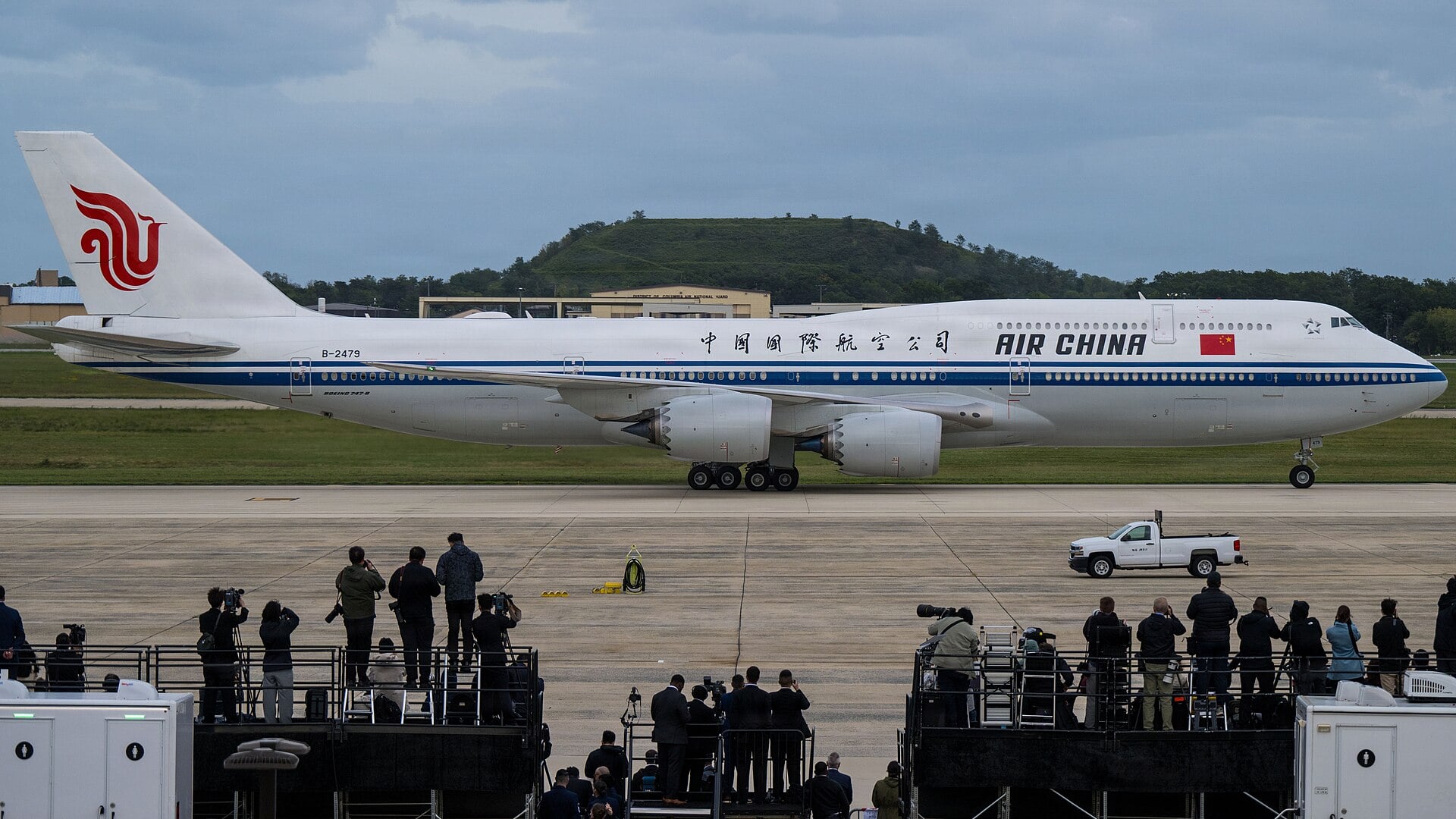
The recent diplomatic engagements involving Chinese President Xi Jinping and Russian President Vladimir Putin in the United States included notable displays of military aircraft. During Xi Jinping's visit, the US conducted two strategic bomber flyovers within a 24-hour period. An unannounced B-1B Lancer performed a surprise pass over Joint Base Andrews, while a scheduled B-2 Spirit flyover concluded the White House ceremonies. These acts are interpreted as a display of US military strength and diplomatic signaling. On Wednesday, a surprise flyover by two B-1B bombers, accompanied by F-16s and F-22 fighters, occurred as President Trump welcomed Xi Jinping at Andrews. The B-1B, recognized for its loud sound and pressure wave when flown low and slow, drew attention when President Trump reacted to the noise. The following day, during a formal state arrival at the White House, a B-2 Spirit escorted by F-22 Raptors performed a ceremonial flyover, emphasizing the importance of the diplomatic occasion. These flyovers are part of a recent pattern where strategic bombers are used in high-profile diplomatic ceremonies, symbolizing US military capability and resolve. Historically, such displays have been employed in summits with Russia, and their use in the context of US-China relations highlights escalating strategic signaling amidst ongoing negotiations on trade and geopolitical issues. Overall, these military flyovers serve as potent symbols of American strategic presence and are carefully integrated into diplomatic events to project power and reinforce alliances in a complex global environment.
US Conducts Strategic Bomber Flyovers Over Chinese and Russian Leaders During State Visits
US Conducts Strategic Bomber Flyovers Over Chinese and Russian Leaders During State Visits
Trending
|
16 days ago

Share to:
Latest news
powered by We Do Dev Work 
We use cookies and similar technologies to enhance your Browse experience, personalize content and ads, provide social media features, and analyze our traffic. By clicking 'Accept All' or continuing to use our website, you consent to the use of cookies as described in our Cookie Policy