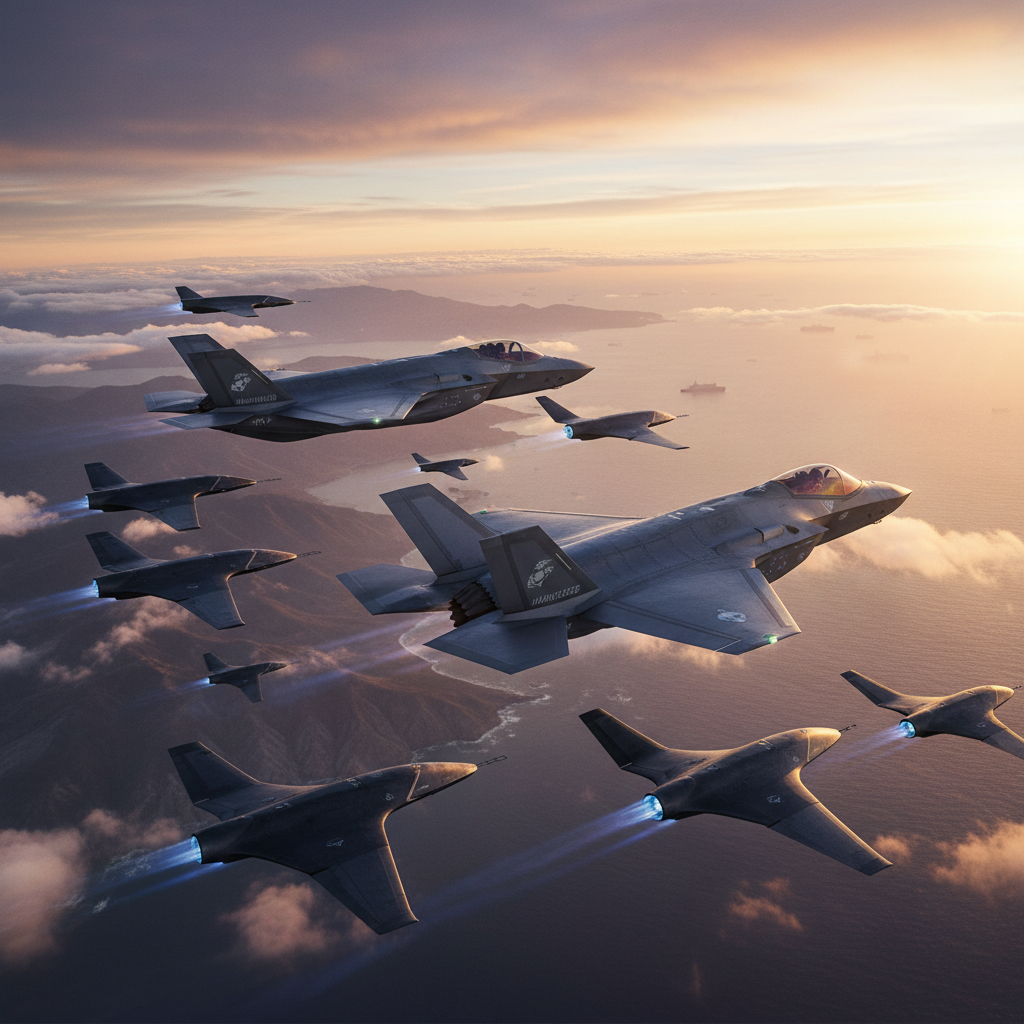
The U.S. Marine Corps is moving forward with an ambitious transformation of its aviation capabilities by integrating collaborative combat aircraft (CCA) with existing fighter platforms such as the F-35. This initiative aims to deploy unmanned systems that can work in tandem with manned aircraft, enhancing operational effectiveness without expecting new crewed aircraft entries for the next decade.
Officials and defense analysts highlight this as the most significant capability change since the introduction of helicopters in the 1950s. Industry leaders like Northrop Grumman and Lockheed Martin are actively involved in developing these next-generation aircraft, which are expected to play a key role in future combat scenarios based on interoperability and technological synergy.
Steve Trimble, a noted military aviation analyst, notes that this move aligns with broader defense strategies, emphasizing the importance of innovation to preserve tactical superiority. The integration of CCAs represents a strategic shift towards more flexible, autonomous, and technologically advanced combat operations, reflecting the Marine Corps' commitment to maintaining technological edge in modern warfare.

