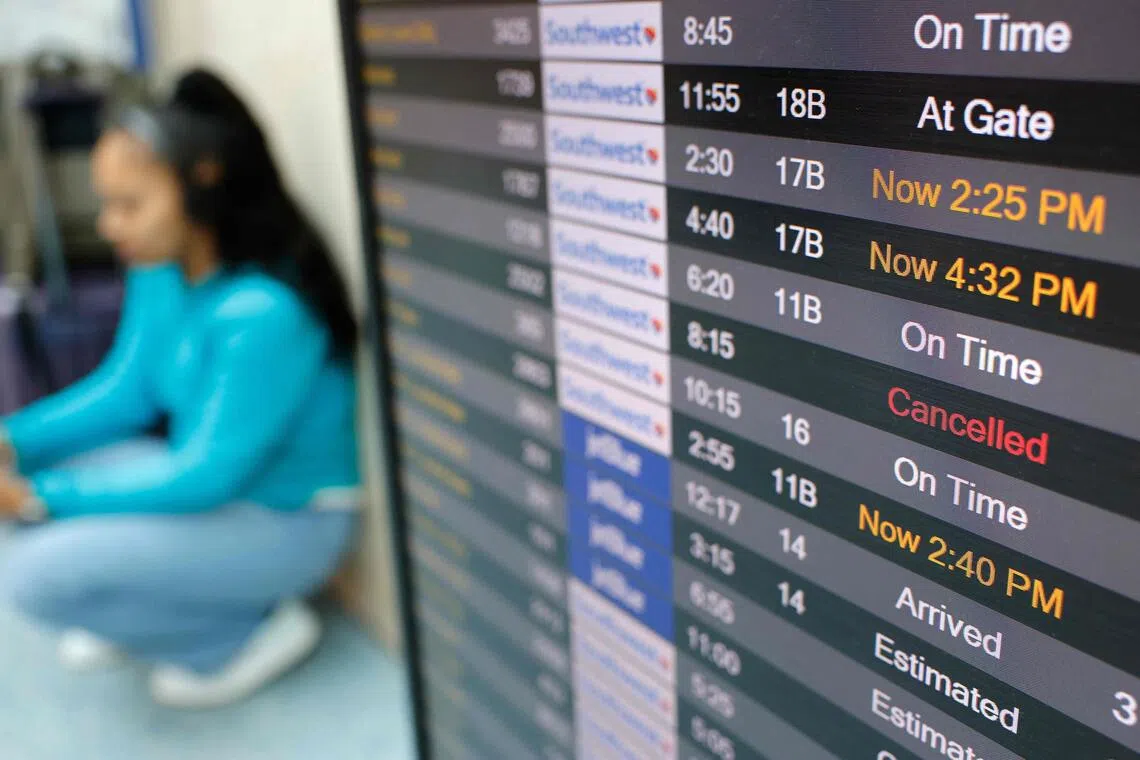
The recent US government shutdown has significantly impacted the aviation industry, leading to widespread flight delays and cancellations affecting over 5.2 million passengers. Last weekend alone, approximately 1.2 million travelers experienced disruptions due to air traffic controller absences, prompting the FAA to impose temporary flight reductions at the busiest airports.
To address these issues, a Senate subcommittee is scheduled to hold a hearing on November 19 to assess the shutdown's impact on aviation safety. The hearing will include testimonies from officials such as Nick Daniels, president of the National Air Traffic Controllers Association, and Chris Sununu, head of Airlines for America. Lawmakers aim to explore long-term solutions to staffing shortages and safety concerns exacerbated during the shutdown.
Background and Industry Response
The FAA mandated a gradual increase in flight restrictions, initially cutting 4% of flights at major airports. These cuts are set to rise to 8% by November 13 and 10% by November 14. Airlines and industry experts have voiced concerns that staffing levels—now about 3,500 controllers below target—are insufficient for safe operations. Many personnel have been working mandatory overtime without pay, underscoring the severity of staffing challenges amid the shutdown.
"The government shutdown has severely impacted our already fragile aviation industry, and recovering from its effects will take time," said Mr. Moran, chair of the aviation subcommittee, emphasizing the need for systemic reforms to ensure safety and stability.
Lawmakers and industry leaders agree that addressing staffing gaps and ensuring continuous pay for air traffic controllers are vital to restoring confidence and safety in the US air travel system. The shutdown has revealed vulnerabilities that could have serious long-term consequences without effective measures.

