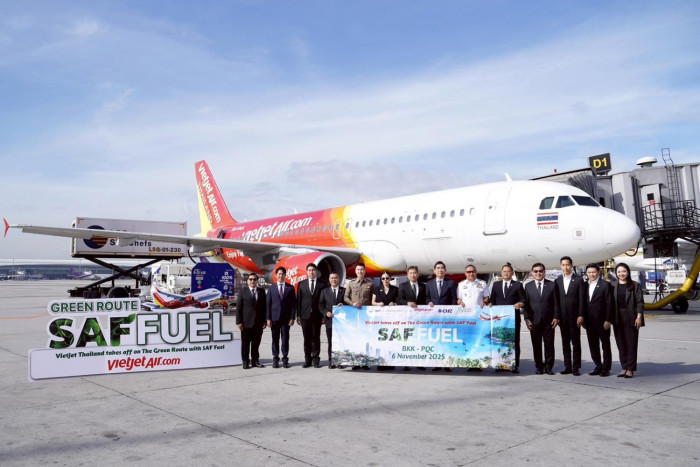
Vietjet Thailand has initiated operations on the Bangkok-Phu Quoc route using a 1% blend of sustainable aviation fuel (SAF), marking a milestone as Thailand's first low-cost airline to adopt this environmentally friendly fuel. The airline plans to expand SAF use to additional routes such as Bangkok-Cam Ranh and Bangkok-Danang in the upcoming year, with the objective of substantially reducing its carbon footprint.
According to Woranate Laprabang, CEO of Vietjet Thailand, SAF has the potential to cut carbon emissions by up to 80% compared to conventional jet fuel. The airline aims for a 5% blend across all operations by 2030, which is projected to reduce total emissions by 153,000 tonnes over the next six years. To facilitate this, the airline intends to sign an agreement with PTT Oil and Retail Business Plc to secure future fuel supplies.
Although SAF is more expensive than traditional fuel—costing more than twice as much—the limited blending percentage is unlikely to impact ticket prices significantly. The airline is also transitioning its fleet to Boeing B737-8 aircraft, which are estimated to consume over 15% less fuel than existing Airbus A320-series jets. The first two of these aircraft are expected to be delivered before Christmas, following delays due to the US government shutdown, with additional aircraft arriving in December and January.
As the fleet modernizes, Vietjet aims to operate around 50 aircraft by 2028, with further growth planned. The delivery delays have temporarily affected some routes, including direct flights to Tokyo (Narita) and Osaka, for which passengers will be refunded or rerouted. Future route expansions include domestic flights to Nakhon Si Thammarat and international services to Ahmedabad, Kolkata, and additional flights to Vietnam's Cam Ranh starting in January.

