
Quick verdict
Ultimately, the choice between American Airlines and British Airways depends heavily on your travel priorities and origin/destination. American Airlines often caters well to travelers primarily based in the United States, offering an extensive domestic network and competitive options for reaching many international destinations, particularly in the Americas. Their approach can be more straightforward and budget-friendly for those prioritizing direct routes and a broad array of departure times from their US hubs. The AAdvantage program is robust for domestic upgraders and mileage earners. British Airways, conversely, tends to be a stronger contender for travellers originating in or frequently visiting the UK and Europe. Its premium cabins and loyalty program (Executive Club, with its Avios currency) can offer significant value for those seeking a more refined experience and access to a comprehensive European network. While both are full-service carriers, BA often projects a more premium image, albeit sometimes with a corresponding price tag. For transatlantic journeys, especially for business travelers or those seeking a more "European" start to their trip, BA often holds an edge.
At a glance
Search your flight
American Airlines and British Airways are two of the most recognizable names in global aviation. As founding members of the Oneworld Alliance, they share a deep partnership, especially across the transatlantic market, offering a vast network of routes connecting North America and Europe. While they operate under the same alliance umbrella and often codeshare on flights, their operational bases, service philosophies, and target demographics can diverge significantly. This comparison will delve into what each airline offers, highlighting their strengths and weaknesses for various types of travelers. We will examine their key differences in areas such as onboard experience, loyalty programs, network coverage, and overall value proposition, helping you decide which airline might be a better fit for your next journey.
About American Airlines Read more
Overview
American Airlines is a major US carrier headquartered in Fort Worth, Texas. According to Wikipedia, it was formed in 1930 from more than 80 small airlines, began passenger service in 1936, and merged with US Airways in 2013 while keeping the American name. It is a founding member of the oneworld alliance and the main operating subsidiary of the Nasdaq-listed American Airlines Group. The airline reports it carries more than 200 million passengers a year.
Network and hubs
American operates ten hubs: Dallas/Fort Worth (the largest), Charlotte, Chicago O'Hare, Los Angeles, Miami, New York JFK, New York LaGuardia, Philadelphia, Phoenix and Washington National. Miami is the main gateway to Latin America and the Caribbean, while Philadelphia, Charlotte and JFK feed transatlantic flights. Together with American Eagle regional partners, it flies almost 6,800 flights a day to nearly 350 destinations in 48 countries. It runs joint businesses with British Airways, Iberia, Aer Lingus and Finnair (Atlantic), Japan Airlines (Pacific) and Qantas.
Fleet
- As of June 2026, Wikipedia lists 1,030 mainline aircraft, the second-largest commercial fleet in the world.
- The fleet is made up of Airbus and Boeing narrowbodies and Boeing widebodies, including 777-200ER, 777-300ER, 787-8 and 787-9 aircraft.
- The average mainline fleet age was 14.7 years in September 2026 (Cirium, via Wikipedia).
On board
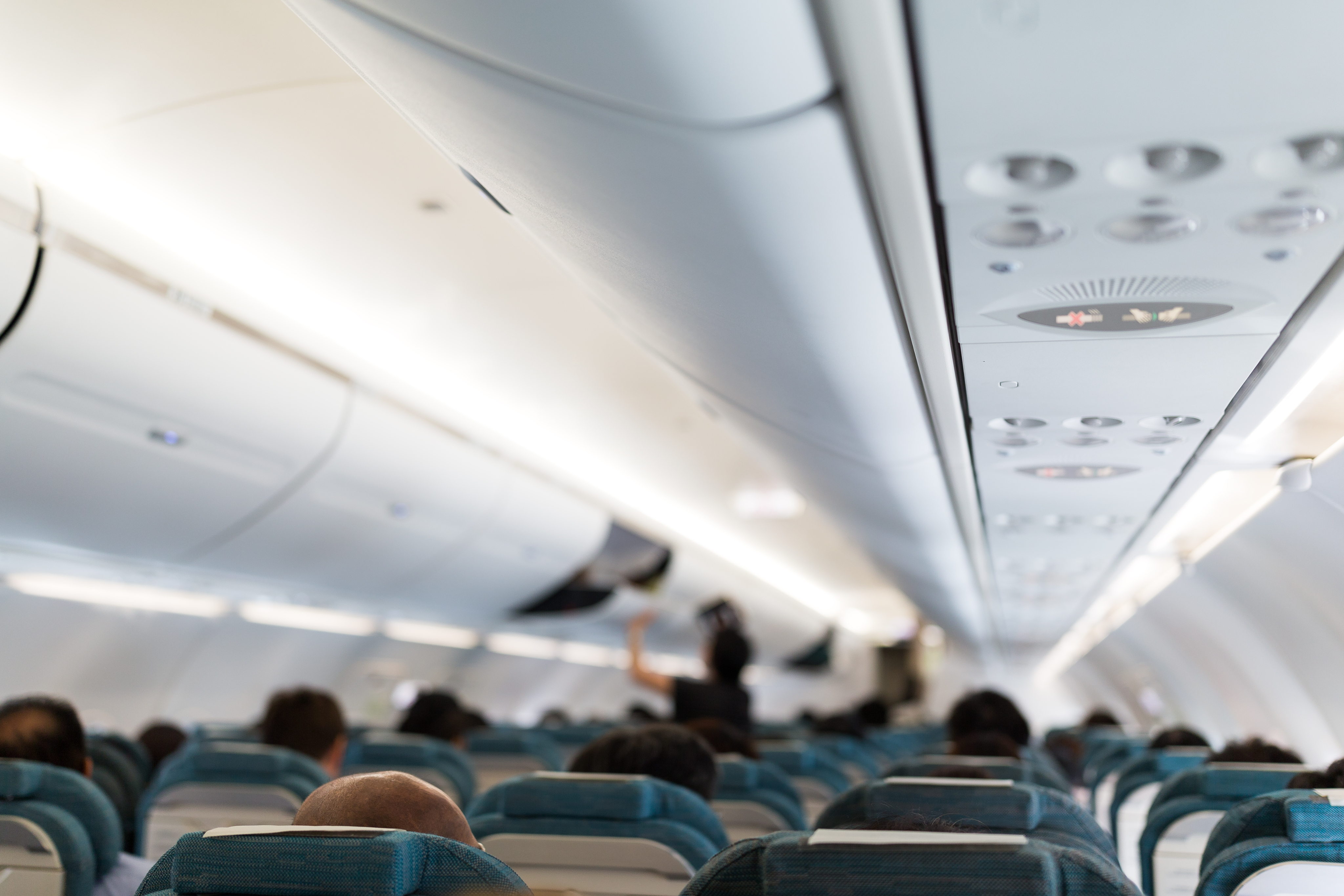
Long-haul flights offer Flagship First on 777-300ERs and select A321T aircraft, and Flagship Business on 777s and 787s, all with lie-flat seats. Premium Economy is fitted on widebody aircraft. Domestic aircraft have First, Main Cabin Extra, Main Cabin and Basic Economy. Main Cabin seat pitch is typically 30–32 inches. Economy passengers receive snacks and drinks; premium cabins get meals on flights of 900 miles or more. Newer 737 and A321 high-density layouts have no seatback entertainment. Wi-Fi details were not confirmed in the sources reviewed.
Good to know
- Baggage: Premium Economy includes two checked bags and Basic Economy permits a carry-on bag. Other fees depend on route and fare, so check aa.com before travelling.
- Basic Economy: seat assignment is usually left until check-in, there are no upgrades or refunds, and boarding is in the last group.
- Lounges: Admirals Clubs are open to paying members and eligible passengers. Flagship Lounges serve international and transcontinental premium passengers.
- Loyalty: AAdvantage is the frequent flyer programme. Its elite tiers match oneworld status levels, and one-way award tickets start from 7,500 miles.
- Regional flying: American Eagle flights are operated by Envoy, PSA, Piedmont, Republic and SkyWest.
- Recent news: in February 2026 the flight attendants' union APFA passed a vote of no confidence in the CEO. In October 2024 the US Department of Transportation fined the airline $50 million over its treatment of passengers with disabilities.
About British Airways Read more
Overview
British Airways (BA) is the flag carrier of the United Kingdom, formed on 31 March 1974 from the merger of BOAC and BEA and their associated airlines. It has been part of International Airlines Group (IAG) since the January 2011 merger with Iberia. It is a member of the oneworld alliance and is headquartered at the Waterside building beside Heathrow Airport. Wikipedia describes it as the second-largest UK-based carrier by fleet size and passengers, behind easyJet.
Network and hubs
The main hub is London Heathrow, where most flights use Terminal 5 and some use Terminal 3. London Gatwick is the second hub. Wikipedia lists about 215 destinations. Subsidiaries BA CityFlyer (London City) and BA Euroflyer (Gatwick) operate short-haul services under BA branding and flight numbers.
Fleet
According to Simple Flying, citing ch-aviation (2026), BA has 297 aircraft. The widebody fleet is 18 Airbus A350-1000, 12 A380, 59 Boeing 777 and 42 Boeing 787. The narrowbody fleet is Airbus A320-family aircraft. Wikipedia gave 274 aircraft with 42 on order as of February 2025, so counts vary by source and date. BA retired its Boeing 747-400s in October 2020.
On board
- Long-haul: First, Club World (business), World Traveller Plus (premium economy) and World Traveller (economy).
- Short-haul: Club Europe (business) and Euro Traveller (economy).
- Club Suite, with a door, was introduced on the A350 in 2019. First suites have a 6 ft 6 in bed.
- Wi-Fi is being rolled out across the fleet. Complimentary access is offered in First on select aircraft.
Good to know
- Baggage: Economy Basic fares are hand baggage only, and hold bags are charged. Other economy fares generally include one 23 kg bag, according to third-party summaries. Check the airline's website for your fare.
- Punctuality: 86.89% on time in February 2025 (Cirium), which placed BA fourth among global airlines that month.
- Lounges: Club Europe and premium cabins give access to business lounges at most airports. First passengers at Heathrow T5 can use the Concorde Room.
- Loyalty: The British Airways Club, part of the Avios programme.
Ranking
Related airline comparisons






Compare the airlines
Compare two airlines side-by-side to see the real difference
We use cookies to keep the site working, understand how it is used, and show relevant content and ads. Choose Accept all to allow them, or Reject all to keep only the cookies the site needs. Read more in our Privacy Policy.