

Quick verdict
Ultimately, the "better" airline between Ryanair and Air Greenland is entirely dependent on the traveler's priorities and destination. For the price-sensitive traveler looking for a quick, affordable hop across European cities, Ryanair is the undeniable choice. Its vast network and frequent departures make it an efficient option for short-haul, point-to-point travel, provided passengers are willing to navigate its unbundled fare structure and often smaller, more distant airports. Conversely, Air Greenland caters to a niche but vital market. For anyone traveling to, from, or within Greenland, it is not merely an airline but an essential lifeline. Its operations prioritize reliability and safety in challenging conditions, offering a unique travel experience that is inherently tied to the breathtaking but formidable Arctic environment. Passengers flying Air Greenland value the connectivity it provides and the specialized services necessary for such remote destinations. In essence, Ryanair is optimized for volume and affordability in a competitive European market, stripping back amenities to deliver low prices. Air Greenland, on the other hand, is built for endurance and essential service in one of the world's most challenging aviation landscapes, where the value lies in its ability to connect an otherwise isolated region. Each excels within its own operational sphere, demonstrating that the best airline is truly the one that best meets the specific demands of the journey.
At a glance
Search your flight
Ryanair, a name synonymous with budget travel across Europe, revolutionized short-haul flights with its no-frills approach. Founded in Ireland in 1984, it has grown to become one of the world's largest airlines, known for its extensive network, frequent flights, and famously low fares. Contrasting sharply with Ryanair's mass-market strategy is Air Greenland, the flag carrier of Greenland. Established in 1960, this Danish-owned airline operates in a profoundly different environment, connecting remote communities within Greenland and linking the island nation to Denmark and Iceland. Its operations are characterized by unique challenges and a focus on essential air services rather than high-volume tourism. This comparison will delve into the distinct operational models, passenger experiences, and route networks of Ryanair and Air Greenland. While seemingly disparate, understanding their core strategies reveals how each airline optimally serves its specific market and passenger base. We will weigh the trade-offs inherent in their respective approaches to air travel.
About Ryanair Read more
Overview
Ryanair is an Irish ultra-low-cost airline headquartered in Swords, County Dublin. According to Wikipedia, it was founded in 1984 by Christopher Ryan and Tony Ryan, and began flying on 8 July 1985 between Waterford and London Gatwick. It is the largest airline in Europe by scheduled passengers carried, fleet size and number of flights. The parent company, Ryanair Holdings plc, is listed on Euronext Dublin and Nasdaq. Its airline subsidiaries are Ryanair DAC, Buzz, Malta Air, Lauda Europe and Ryanair UK. Michael O'Leary is group chief executive. Ryanair does not belong to any airline alliance.
Network and hubs
The group serves around 230 airports in 36 countries and operates more than 3,500 short-haul flights a day. Its main bases are Dublin, London Stansted (the largest base) and Milan Bergamo. It also has bases across the UK, Spain, Italy, Poland, Portugal, Greece, Morocco and many other countries. Wikipedia lists Berlin as ending on 24 October 2026 and Thessaloniki on 25 October 2026. The network is point-to-point and focuses on Europe, North Africa and nearby regions. There are no long-haul services.
Fleet
As of April 2026, Wikipedia lists a group fleet of 651 aircraft:
- 410 Boeing 737-800
- 210 Boeing 737 MAX 8-200 (197 seats)
- 26 Airbus A320-200, operated by Lauda Europe
- 1 Boeing 737-700, operated by Buzz
- 4 Bombardier Challenger 3500 business jets for engineering and crew transport
There are 150 Boeing 737 MAX 10 on order, with deliveries scheduled from 2027 to 2033. An earlier snapshot from Flightradar24 counted 611 aircraft in February 2026, so totals vary by source and date.
On board
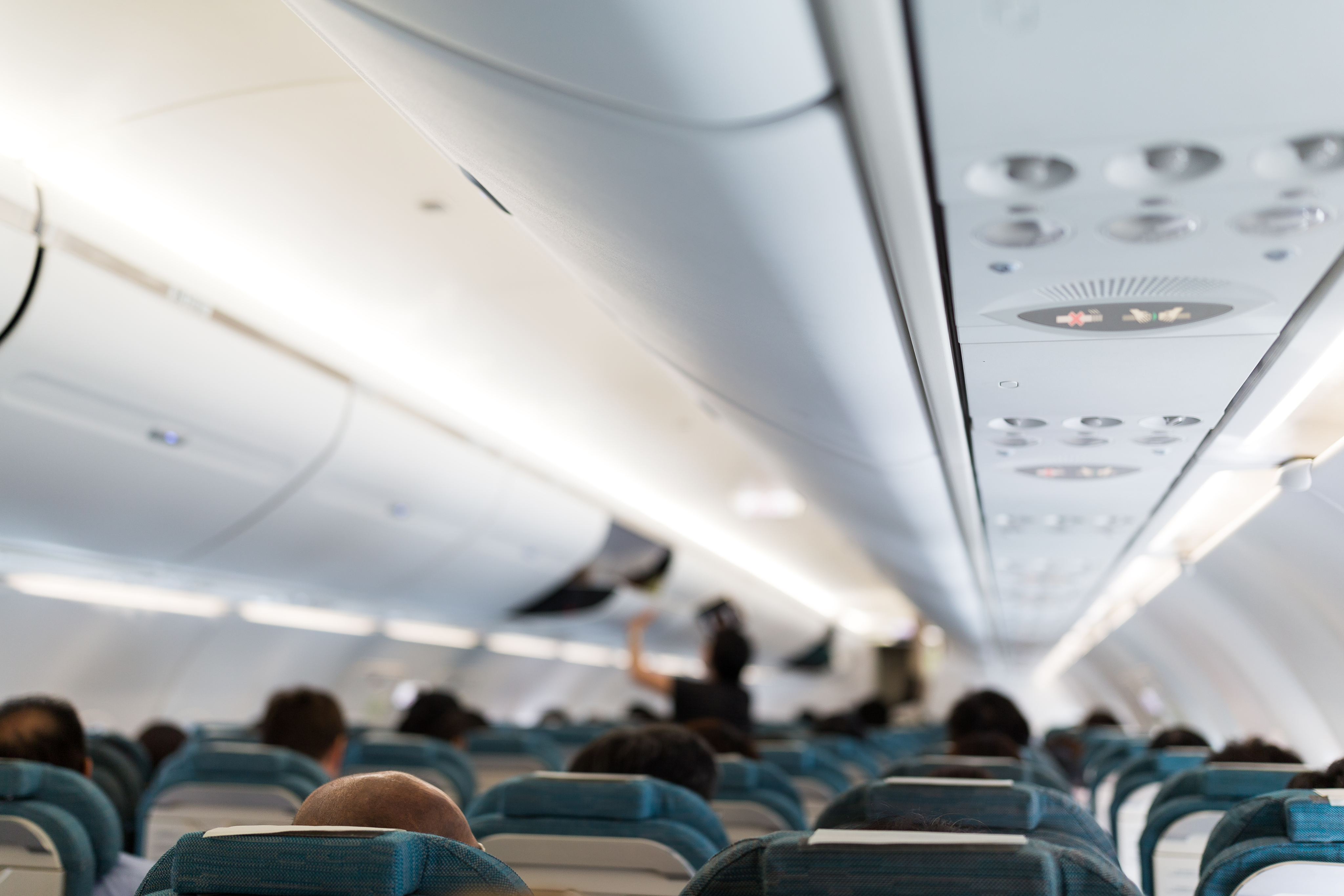
Ryanair operates a single economy cabin. Seat pitch, in-flight entertainment, Wi-Fi and meal details were not confirmed in the sources reviewed. Food and drink are generally sold on board rather than included, but check the airline's website for current offerings.
Good to know
- Baggage: since August 2018, passengers must buy Priority Boarding to carry both a large and a small cabin bag, according to Wikipedia. Current bag sizes, weights and checked-bag fees should be checked on ryanair.com before travel.
- Punctuality: Ryanair lost landing slots at Eindhoven in November 2025 after repeated delays, according to Wikipedia. No on-time figure is quoted here because none was verified.
- Lounges and upgrades: none were identified in the sources reviewed.
- Group operators: some flights are operated by Buzz, Malta Air, Lauda Europe or Ryanair UK under the Ryanair brand.
About Air Greenland Read more
Global Network and Operations
- Operates scheduled domestic flights within Greenland and international flights to Copenhagen and Reykjavik.
- Fleet includes Airbus A330-200 for long-haul and Dash 8 Q400s for domestic routes.
- Key hubs include Nuuk Airport, Kangerlussuaq Airport, and Narsarsuaq Airport.
- Air Greenland also provides essential helicopter services to remote settlements.
Air Greenland primarily serves the unique and challenging aviation environment of Greenland, connecting remote communities and offering international links to Denmark and Iceland. The airline operates a fleet of modern turboprop and jet aircraft adapted for Arctic conditions, facilitating passenger and cargo transport across Greenland's vast territory.
Innovation and Milestones
- Introduced the first commercial Air Greenland Airbus A330 long-haul aircraft in 2011, significantly enhancing international connectivity.
- Pioneered the use of advanced navigation systems and de-icing technology suitable for polar operations.
- Developed effective cargo and passenger logistical solutions tailored to Arctic weather and terrain.
- Maintains a strong safety regime to operate reliably in remote and harsh environmental conditions.
Customer Experience and Recognition
Air Greenland emphasizes customer comfort and safety, offering a single-class cabin on domestic flights with enhanced amenities on international routes. Passengers benefit from attentive service, local cultural hospitality, and reliable scheduling critical for communities dependent on air travel.
The airline is recognized for:
- Consistent on-time performance adapted to weather constraints.
- Quality in-flight meals featuring Greenlandic cuisine on longer routes.
- Robust safety record in Arctic aviation standards.
Future Outlook
Air Greenland aims to expand its fleet modernization with eco-friendly aircraft and improve route connectivity to better serve Greenland’s population and international travelers. Investments focus on sustainable aviation practices, enhancing customer digital experiences, and exploring new Arctic air routes.
Ranking
Related airline comparisons





Compare the airlines
Compare two airlines side-by-side to see the real difference
We use cookies to keep the site working, understand how it is used, and show relevant content and ads. Choose Accept all to allow them, or Reject all to keep only the cookies the site needs. Read more in our Privacy Policy.