
Quick verdict
Turkish Airlines offers a more extensive network through its alliance with Star Alliance, a significantly larger fleet, and a comprehensive range of cabin classes including Economy, Comfort Class, and Business Class with lie-flat seats. It provides premium inflight amenities such as award-winning catering, lounge access at major airports, and extensive long-haul international flights connecting multiple continents. Corendon Airlines, on the other hand, focuses on short- to medium-haul leisure travel with a smaller fleet and primarily economy-based seating, emphasizing cost-effectiveness and reliability for holiday travelers. Both airlines maintain strong safety records and punctuality, but Turkish Airlines stands out for greater comfort and service inclusivity. Travelers seeking premium services, a broad global network, and enhanced onboard experience are likely to prefer Turkish Airlines, while budget-conscious leisure travelers may find Corendon Airlines more suitable.
At a glance
Search your flight
Turkish Airlines and Corendon Airlines are two prominent international carriers, each representing Turkey with strong regional presence and service offerings. This comparison highlights their fleet size, route networks, cabin classes, customer experience, and operational approaches to help travelers make informed decisions.
About Turkish Airlines Read more
Overview
Turkish Airlines (Türk Hava Yolları) is the flag carrier of Turkey. According to Wikipedia, it was founded on 20 May 1933, is listed on Borsa Istanbul (THYAO) and has been a member of Star Alliance since 2008. Its corporate headquarters are at the former Atatürk Airport site in Istanbul. Its subsidiaries include the low-cost carrier AJet, Turkish Cargo and Turkish Technic. Its frequent-flyer programme is Miles&Smiles.
Network and hubs
The main hub is Istanbul Airport, which replaced Atatürk Airport in a phased move completed in 2019. CAPA lists Esenboğa (Ankara) and Adnan Menderes (Izmir) as secondary hubs. Wikipedia describes the airline as serving more countries than any other carrier, with about 340 to 350 destinations in Europe, Asia, Africa, Oceania and the Americas, including a large domestic network. Most intercontinental journeys connect through Istanbul.
Fleet
Turkish Airlines Group, including AJet, had 516 aircraft in 2025, with up to 570 planned for 2026, according to its CFO (reported 5 March 2026). Third-party trackers such as Plane Finder list roughly 420 mainline aircraft, including Airbus A321neo, A321, A330, A350-900 and A320 types and Boeing 737, 777 and 787-9 types. Figures vary by source and date.
On board
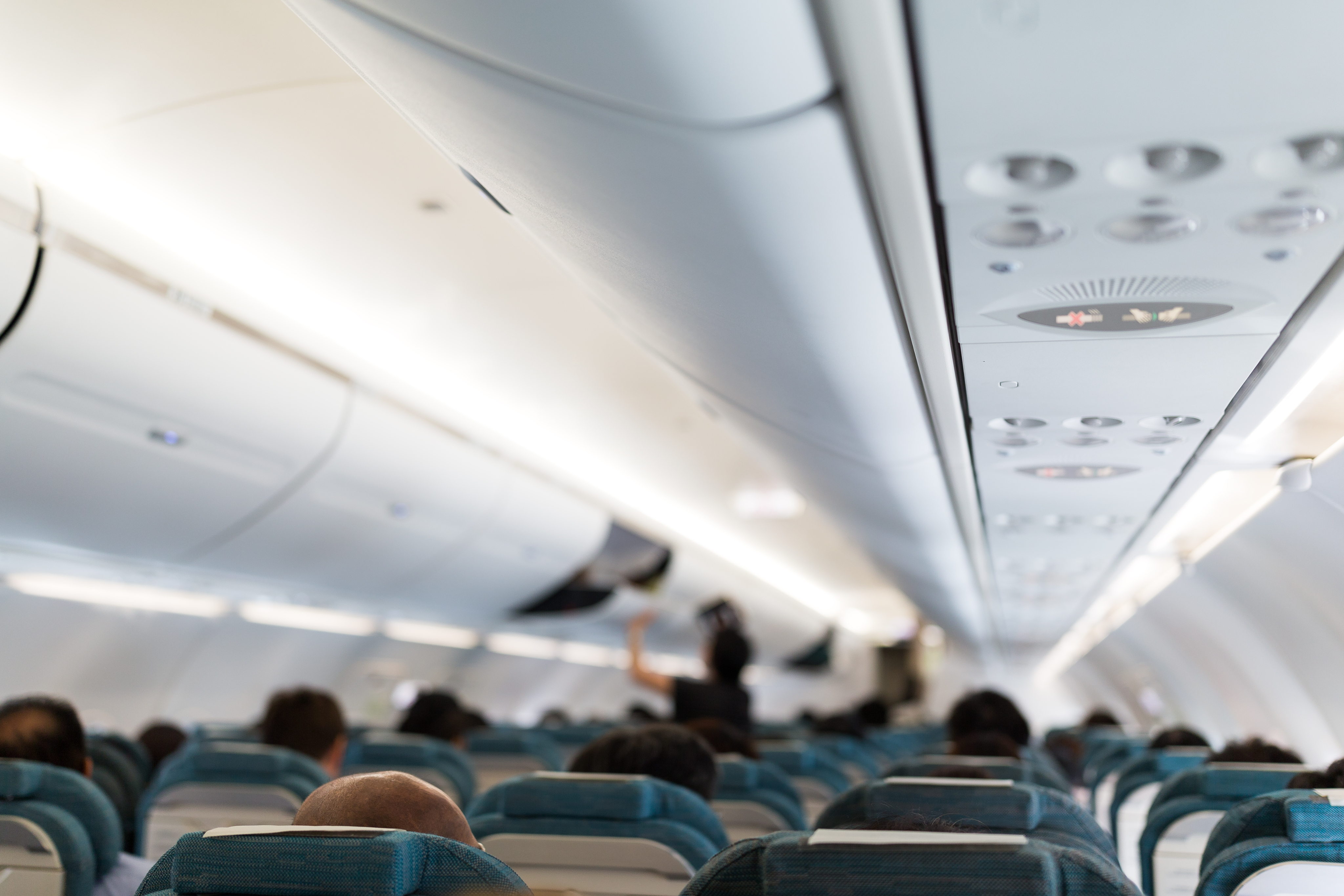
Turkish Airlines operates two cabins, Economy and Business. Wego reports that every Economy fare includes a meal, checked baggage and seatback entertainment. Business class adds lie-flat seats on long-haul aircraft, Flying Chef dining and lounge access. Wego also reports that Wi-Fi is free for Business passengers and Miles&Smiles members, with free Wi-Fi for all passengers being rolled out through 2026. Seat dimensions vary by aircraft type and are not given here.
Good to know
- Cabin baggage: per the airline's baggage page, Economy allows one 8 kg bag (55x40x23 cm) plus a 4 kg personal item. Business allows two 8 kg bags plus a personal item.
- Checked baggage: the allowance depends on route and fare, so check the booking.
- Lounges: The Points Guy notes two large lounges at Istanbul, one for elite members and one for Business passengers.
- Punctuality: Simple Flying reported 81.41% on-time performance for 2025, using Cirium data.
- Safety: Wikipedia records 19 incidents and accidents in the airline's history, 15 of them fatal.
About Corendon Airlines Read more
Overview
Corendon Airlines (legally Turistik Hava Taşımacılık A.Ş.) is a Turkish leisure airline. According to Wikipedia, it was founded in 2004, began flying in 2005 and is a subsidiary of Corendon Tourism Group. It is headquartered in Antalya. It belongs to no global alliance. Sister carriers are Corendon Dutch Airlines and Corendon Airlines Europe.
Network and hubs
The airline flies scheduled and charter services to more than 140 destinations in Europe, the Middle East and North Africa. Its hubs are Antalya and İzmir Adnan Menderes, and it also has a base at Ankara Esenboğa. Most traffic is holiday flying between Turkey and European cities. It has also kept flying to Russia, including charters from Perm to Antalya announced for May 2024.
Fleet
The fleet is all Boeing 737. The Wikipedia fleet table lists 9 Boeing 737-800 and 6 Boeing 737 MAX 8, 15 aircraft in total, while Plane Finder lists 14. Counts differ between sources and change often. In September 2026, FlightGlobal reported that the Corendon group would cut its fleet from 30 to 21 aircraft this winter because of high fuel costs. Capacity and schedules may therefore be smaller than in summer.
On board
All aircraft are single-class economy. The 737-800 has 189 seats in a 3-3 layout with a pitch of about 30 inches, according to Seatlink. Kayak says there are no power sockets or Wi-Fi. Meals are generally an extra, except on the Premium fare, which includes a hot meal or snacks. Seats and meals can be pre-selected for a fee on lower fares.
Good to know
- Fares: the branded fares are Lite, Eco, Flex and Premium (All Inclusive). Premium includes a 30 kg bag, seat selection, priority boarding and flexible changes or refunds.
- Cabin baggage: the airline's baggage page allows one 10 kg bag and one 4 kg underseat bag on the Eco fare.
- Checked baggage: Flex includes 23 kg and Premium 30 kg. Extra baggage of up to 40 kg per person can be bought, and no single piece may exceed 32 kg.
- Extras: the additional services page lists seat selection, meals, priority check-in and boarding, lounge access, pets in cabin and sports equipment.
- Safety: Wikipedia lists a 2012 cockpit fire during pushback at Antalya, with injuries during the evacuation, and a 2024 bird-strike engine failure that ended in an emergency landing at Frankfurt.
Ranking
Related airline comparisons



Compare the airlines
Compare two airlines side-by-side to see the real difference
We use cookies to keep the site working, understand how it is used, and show relevant content and ads. Choose Accept all to allow them, or Reject all to keep only the cookies the site needs. Read more in our Privacy Policy.