Quick verdict
Turkish Airlines generally offers a broader international route network and a larger, more modern fleet compared to Egyptair. While Egyptian Airlines tends to have competitive pricing and good service, Turkish Airlines often provides a higher level of comfort and more extensive global connectivity. Both airlines maintain commendable in-flight service standards, but Egyptian Airlines may appeal more to budget-conscious travelers or those focusing on regional destinations. Ultimately, Turkish Airlines is better suited for international travelers seeking comfort and variety, whereas Egyptair is ideal for those prioritizing cost and regional access.
At a glance
Search your flight
This comparison explores the key aspects of Turkish Airlines and EgyptAir including pricing, comfort, fleet composition, customer service, and route networks. It aims to provide a clear overview to help travelers make informed decisions between these two carriers.
About Turkish Airlines Read more
Overview
Turkish Airlines (Türk Hava Yolları) is the flag carrier of Turkey. According to Wikipedia, it was founded on 20 May 1933, is listed on Borsa Istanbul (THYAO) and has been a member of Star Alliance since 2008. Its corporate headquarters are at the former Atatürk Airport site in Istanbul. Its subsidiaries include the low-cost carrier AJet, Turkish Cargo and Turkish Technic. Its frequent-flyer programme is Miles&Smiles.
Network and hubs
The main hub is Istanbul Airport, which replaced Atatürk Airport in a phased move completed in 2019. CAPA lists Esenboğa (Ankara) and Adnan Menderes (Izmir) as secondary hubs. Wikipedia describes the airline as serving more countries than any other carrier, with about 340 to 350 destinations in Europe, Asia, Africa, Oceania and the Americas, including a large domestic network. Most intercontinental journeys connect through Istanbul.
Fleet
Turkish Airlines Group, including AJet, had 516 aircraft in 2025, with up to 570 planned for 2026, according to its CFO (reported 5 March 2026). Third-party trackers such as Plane Finder list roughly 420 mainline aircraft, including Airbus A321neo, A321, A330, A350-900 and A320 types and Boeing 737, 777 and 787-9 types. Figures vary by source and date.
On board
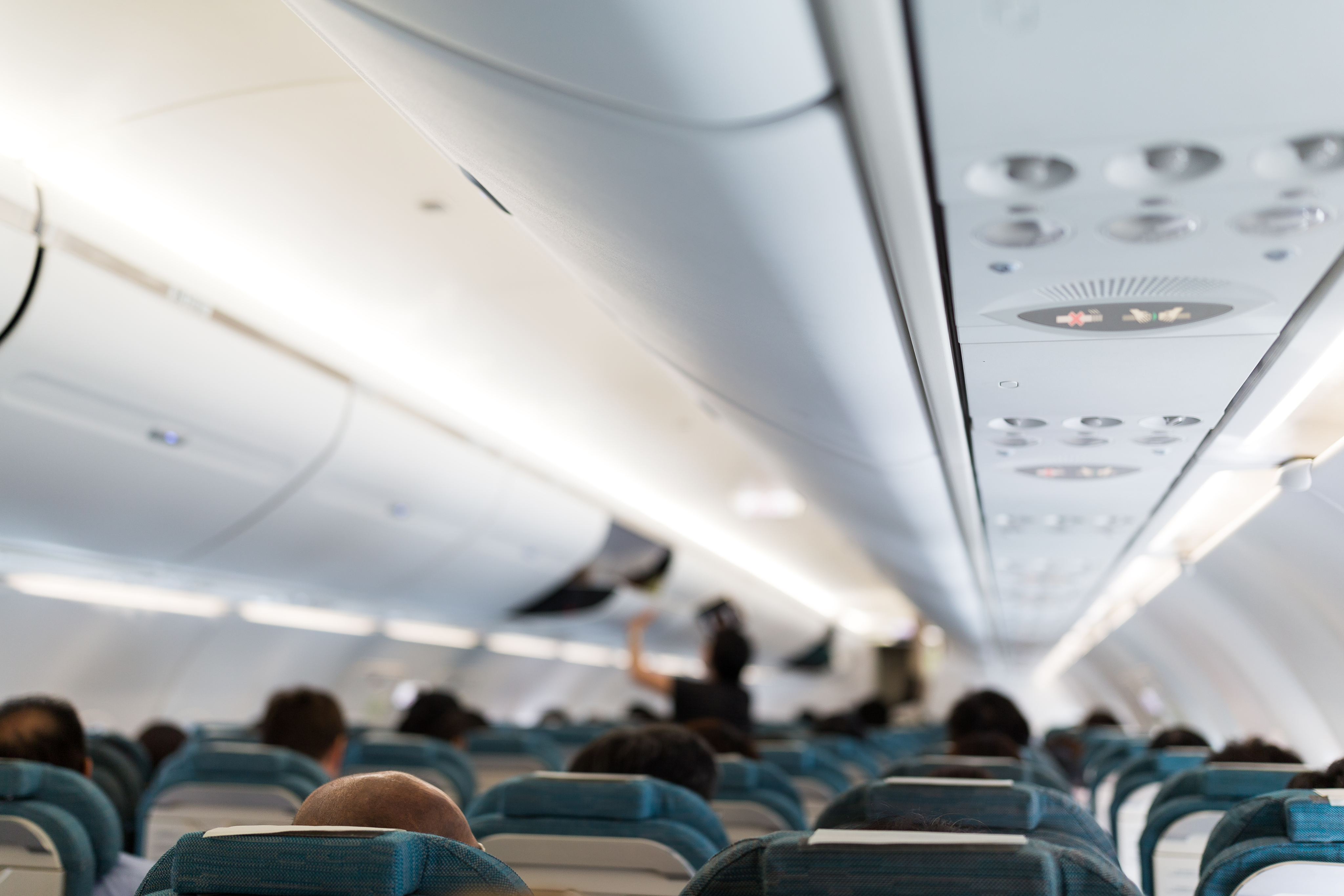
Turkish Airlines operates two cabins, Economy and Business. Wego reports that every Economy fare includes a meal, checked baggage and seatback entertainment. Business class adds lie-flat seats on long-haul aircraft, Flying Chef dining and lounge access. Wego also reports that Wi-Fi is free for Business passengers and Miles&Smiles members, with free Wi-Fi for all passengers being rolled out through 2026. Seat dimensions vary by aircraft type and are not given here.
Good to know
- Cabin baggage: per the airline's baggage page, Economy allows one 8 kg bag (55x40x23 cm) plus a 4 kg personal item. Business allows two 8 kg bags plus a personal item.
- Checked baggage: the allowance depends on route and fare, so check the booking.
- Lounges: The Points Guy notes two large lounges at Istanbul, one for elite members and one for Business passengers.
- Punctuality: Simple Flying reported 81.41% on-time performance for 2025, using Cirium data.
- Safety: Wikipedia records 19 incidents and accidents in the airline's history, 15 of them fatal.
About EgyptAir Read more
Overview
EgyptAir is the state-owned flag carrier of Egypt. According to Wikipedia, it was founded on 7 June 1932 as Misr Airlines and began flying in July 1933. It is part of Egyptair Holding Company, owned by the Egyptian government, and is headquartered at Cairo International Airport. It joined Star Alliance in 2008 and is the only MENA-based carrier in the alliance. Subsidiaries include Air Cairo, Egyptair Cargo and Smart Aviation Company.
Network and hubs
Cairo is the main hub, with Alexandria and Sharm El Sheikh as focus cities. As of June 2026 the airline served 84 international and nine domestic destinations in 56 countries across Africa, Europe, Asia and the Americas (Wikipedia).
Fleet
Wikipedia lists a fleet of 71 aircraft in 2026. The airline took delivery of its first Airbus A350-900 in February 2026 and has 16 on order, with seven expected by the end of 2026. The A350 is intended to replace the Boeing 777-300ER, while the A330 fleet is being retrofitted with the same cabin. The airline also holds an order for 18 Boeing 737 MAX 8s, with deliveries beginning in 2026 (see One Mile at a Time). Current types include the Boeing 787-9, 777-300ER, 737-800 and Airbus A320 family and A330 aircraft.
On board
Mainline aircraft have Business and Economy cabins. On the Boeing 787-9, Business is a 1-2-1 lie-flat layout with 30 seats, and the aircraft has 279 Economy seats (SeatMaps). The A330 cabins vary by sub-type. Long-haul aircraft have seatback screens; see the One Mile at a Time 787 Business review for details. Meal and Wi-Fi provision was not confirmed from an official source.
Good to know
- Baggage: third-party guides report 2 x 23 kg checked bags in Economy on most international fares (some promotional fares allow one), 2 x 32 kg in Business, and an 8 kg cabin bag plus a personal item in Economy (aifly.one). Domestic flights are reported as one 23 kg bag. Confirm on egyptair.com before travelling.
- Lounges: EgyptAir runs three lounges at Cairo Terminal 3 (One Mile at a Time review).
- Loyalty: Egyptair Plus is the frequent-flyer programme, linked to Star Alliance status benefits.
- Fares and fees: no typical fares, change fees or punctuality figures were found from published sources.
Ranking
Related airline comparisons
Compare the airlines
Compare two airlines side-by-side to see the real difference
We use cookies to keep the site working, understand how it is used, and show relevant content and ads. Choose Accept all to allow them, or Reject all to keep only the cookies the site needs. Read more in our Privacy Policy.