Etihad Airways vs Vietnam Airlines
 VS
Quick verdict
Which is better: Etihad Airways or Vietnam Airlines?
Etihad Airways generally offers a more luxurious travel experience with modern aircraft and high-quality service, although its prices can be on the higher side compared to Vietnam Airlines. Vietnam Airlines provides competitive pricing and a growing route network, making it an excellent option for budget-conscious travelers. While Etihad Airways excels in comfort and premium services ideal for long-haul travelers, Vietnam Airlines is well-suited for regional travel and those prioritizing affordability. Both airlines maintain reliable fleets and offer solid service, but the choice ultimately depends on the traveler's preferences and needs.
At a glance
Search your flight
What our team and readers say
Etihad Airways
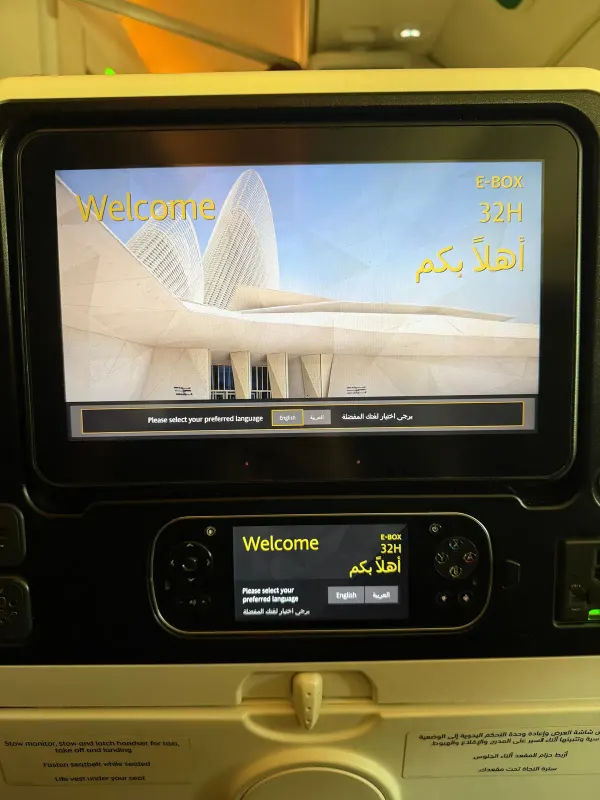
Etihad 787-9 economy, Brussels to Abu Dhabi: tasty lamb, free fast Wi-Fi and an early arrival
A comfortable, well-kept 787-9 with friendly crew, a tasty meal and fast free Wi-Fi. Budget for extras: the cheapest fare has no checked bag, and choosing your seat costs extra.
Pakkard · Visited Oct 2026
1 review of Etihad Airways →Vietnam Airlines
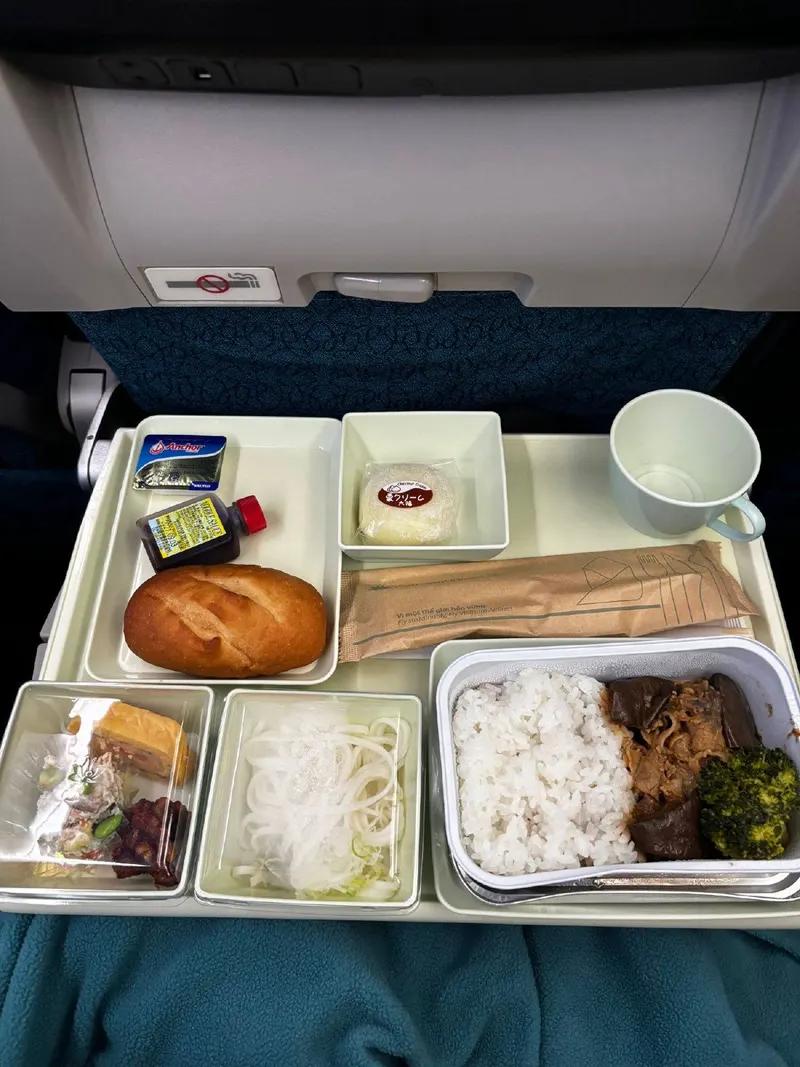
Vietnam Airlines daytime from Tokyo via Ho Chi Minh City: a storm delay, handled well
A daytime way home: a morning departure from Narita, a change in Ho Chi Minh City and Bangkok in the evening. A storm held the last leg on the runway for about an hour and made the flight bumpy, but the pilot handled it very well. The food and service are fine rather than special, and there are no seatback screens.
Nam · Visited Oct 2026
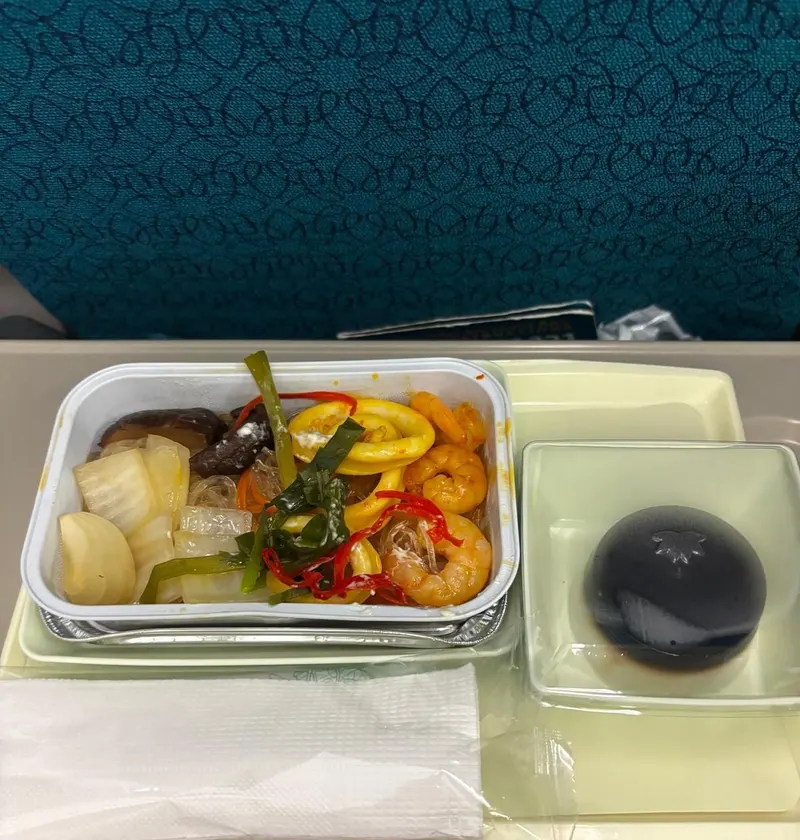
Vietnam Airlines overnight to Tokyo via Da Nang: dinner, breakfast and a blanket in economy
Good for an overnight trip on a budget: two meals across the two flights, a blanket and pillow for the night flight, and seats with enough legroom. The food and service are fine rather than special, and there are no seatback screens.
Nam · Visited Oct 2026
All 2 reviews of Vietnam Airlines →This comparison explores key aspects of Etihad Airways and Vietnam Airlines, focusing on factors such as pricing, in-flight comfort, fleet composition, quality of service, and route coverage. The aim is to provide an overview that assists travelers in choosing between these two carriers.
About Etihad Airways Read more
Overview
Etihad Airways is one of the two flag carriers of the United Arab Emirates, alongside Emirates. According to Wikipedia, it was established by decree in July 2003 and began commercial operations in November 2003. It is owned by Etihad Aviation Group and its head office is in Khalifa City, Abu Dhabi. Wikipedia reports 2025 revenue of US$6.8 billion and a profit of US$544 million. Etihad is not a member of any of the three major airline alliances. Its frequent-flyer programme is Etihad Guest.
Network and hubs
The main hub is Zayed International Airport in Abu Dhabi. Wikipedia describes a network of more than 120 passenger and cargo destinations across the Middle East, Africa, Europe, Asia, Australia and North America, with more than 1,000 flights a week. Etihad's January 2026 traffic statistics give 110 network destinations, including seasonal and cargo routes and those due to start within 12 months, of which 93 were operated in January. Wikipedia also notes that the Abu Dhabi–Tel Aviv route carried 100,000 passengers in the first quarter of 2026, with more than two-thirds connecting onward.
Fleet
Etihad's own figures show an operating fleet of 127 aircraft at the start of 2026, up from 101 a year earlier. This figure includes freighters and short-term ACMI leases. Wikipedia's infobox lists a lower passenger-fleet count of 110, and the article text cites 107 aircraft as of July 2025, so counts vary by definition. The fleet consists of Airbus and Boeing aircraft, including the Boeing 787 Dreamliner and the Airbus A380.
On board
Wikipedia states that the A380 and 787 introduced the airline's current cabin names: The Residence and The Apartment (A380 only), First Suite (787-9), Business Studio and Economy Smart. The Residence is a three-room private cabin on the A380. Cabin layouts differ by aircraft, so travellers should check the seat map for their flight. Seat pitch, meal and entertainment details were not verified for this profile.
Good to know
- Etihad's January 2026 load factor was 89.9 per cent, so busy flights are common.
- Baggage allowances, change fees and lounge access depend on fare and route. Check them on etihad.com before booking.
- Etihad Guest is the loyalty programme.
- Fleet and destination figures change often. Those above are dated as stated.
About Vietnam Airlines Read more
Overview
Vietnam Airlines is the flag carrier of Vietnam. According to Wikipedia, it traces its origins to Vietnam Civil Aviation, founded on 15 January 1956. It is headquartered at 200 Nguyen Son in Hanoi's Long Bien district and is the parent of the low-cost carrier Pacific Airlines and of Vietnam Air Services Company (VASCO). A 2026 outlook report describes the government as the controlling shareholder, with Japan's ANA Holdings as a strategic partner. The airline joined the SkyTeam alliance in June 2010 and is listed on the Ho Chi Minh City stock exchange.
Network and hubs
The main hubs are Noi Bai International Airport in Hanoi and Tan Son Nhat International Airport in Ho Chi Minh City. Da Nang is a secondary hub, and Phnom Penh and Siem Reap are focus cities. Wikipedia lists 65 destinations and, in the body text, 117 routes across 19 countries, excluding codeshares. Long-haul services reach Europe, Australia and the United States, alongside a dense network in Northeast and Southeast Asia.
Fleet
Wikipedia gives a fleet of 97 aircraft in 2026 (retrieved October 2026). The outlook report describes a mainline fleet of Airbus A321ceo and A321neo narrowbodies, A320neo aircraft, and widebody Airbus A350-900 and Boeing 787-9 and 787-10 aircraft. Turboprops are operated under the VASCO brand. The same report mentions plans for up to 30 more widebodies for delivery between 2028 and 2030.
On board
- Business: lie-flat seats in a 1-2-1 layout on the 787 and A350; 2-2 recliner seats with 45 in pitch on the A321.
- Premium Economy: 38–42 in pitch, only on 787-9 and A350 aircraft, with hot meals on every flight.
- Economy: 31–32 in pitch and 32 in seat width.
- Meals: refreshments on flights over 90 minutes, and hot meals on flights over two hours.
- Entertainment: seatback screens on the A350 and 787, and streaming to personal devices on the A321neo.
Wi-Fi details were not confirmed in the sources reviewed.
Good to know
- Checked baggage: on Europe and Australia itineraries, the airline's baggage page lists Economy at one 23 kg piece, Premium Economy at two 23 kg pieces and Business at two 32 kg pieces. Allowances vary by route, notably for Japan.
- Cabin baggage: the hand baggage rules allow Economy 12 kg in total, made up of one piece of up to 10 kg plus an accessory.
- Loyalty: the Lotusmiles programme is free to join. Miles can be earned on Vietnam Airlines Group, SkyTeam and partner airlines.
- Safety: Wikipedia, citing the Aviation Safety Network, records six accidents or incidents since 1951, three of them fatal.
Ranking
Related airline comparisons
 VS
Trending
Qatar Airways VS Etihad Airways
 VS
Trending
Turkish Airlines VS Etihad Airways
VS 
Trending
Etihad Airways VS Emirates
 VS
Trending
Cathay Pacific VS Vietnam Airlines
 VS
Trending
Thai Airways International VS Vietnam Airlines
 VS
Trending
Oman Air VS Etihad Airways
VS Trending
Thai Airways International VS Etihad Airways
VS 
Trending
Etihad Airways VS Singapore Airlines
Compare the airlines
Compare two airlines side-by-side to see the real difference
We use cookies to keep the site working, understand how it is used, and show relevant content and ads. Choose Accept all to allow them, or Reject all to keep only the cookies the site needs. Read more in our Privacy Policy.